
On the cover: A boat cruising through Sundarban by Touhid Biplob

Located between the West Bengal state of India and the Khulna division of Bangladesh, Sundarban is the largest single-patch mangrove forest in the world. Approximately 40% of its land is within the Indian border, housing numerous rare, endangered, and, unfortunately, now locally extinct animals. It is a UNESCO World Heritage Site for its biodiversity and a hotspot for tourism.
Geographical Remarks and Origin
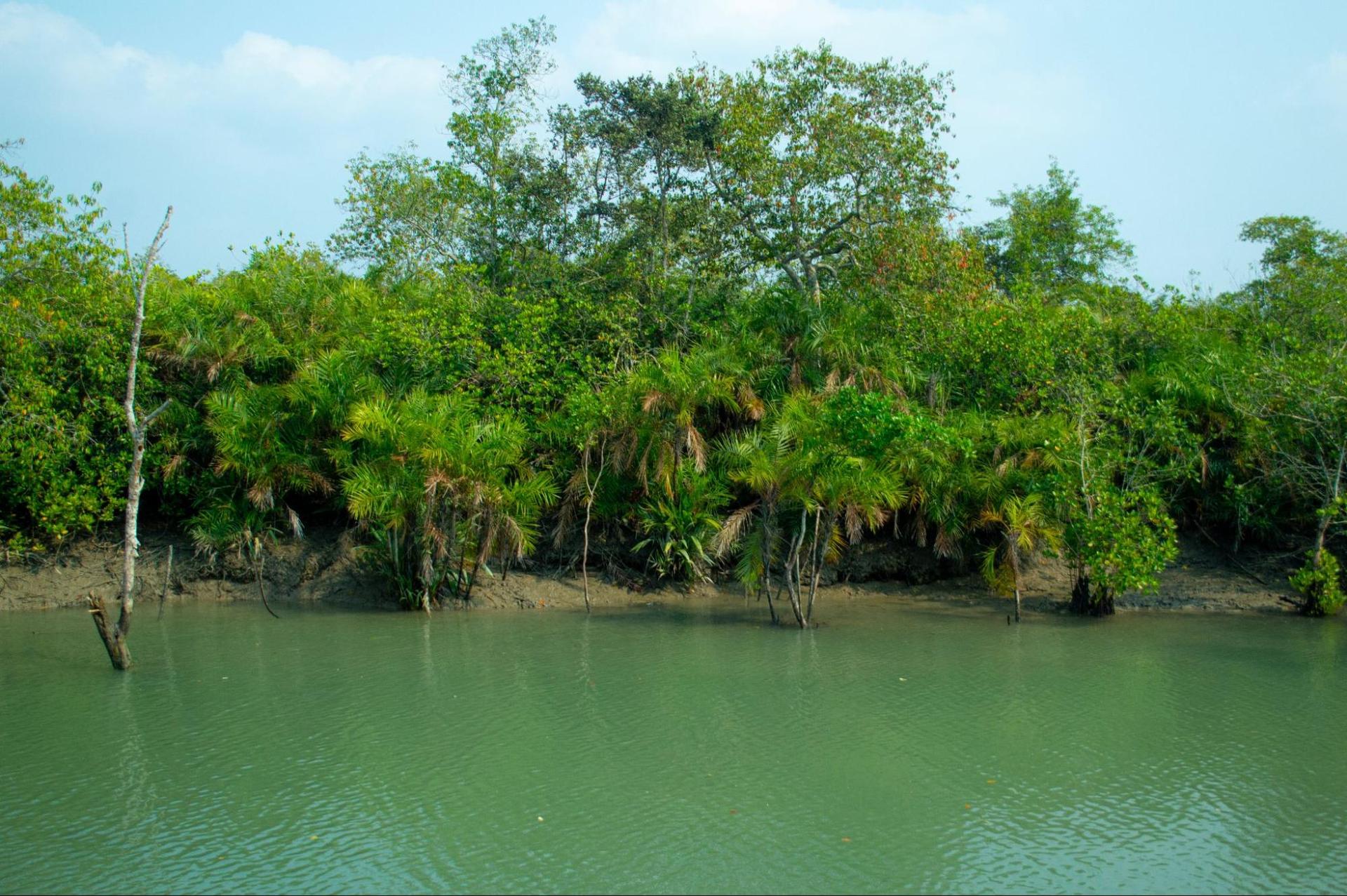
The Indian part of Sundarban lies in the Ganges Delta, a super confluence of the Hooghly, Padma, Brahmaputra, and Meghna rivers. The major part of the forest is dominated by Heritiera fomes, a mangrove tree from the Malvaceae family. Alternatively, these plants are called Sundar, or sundri, from which the name Sundarban may have been derived. In Bangladesh, people say the name instead comes from "Sundôrbôn," a synonym for ‘beautiful forest.’

The forest covers approximately 10,277 km², out of which 4,260 km², is in India. Furthermore, 1,700 km² is occupied by water bodies like rivers and creeks spanning from a few meters to several kilometers in length. The complex system of tidal water waves makes almost every corner of this place accessible by boats and ferries.
The Historical Decay of Sundarban
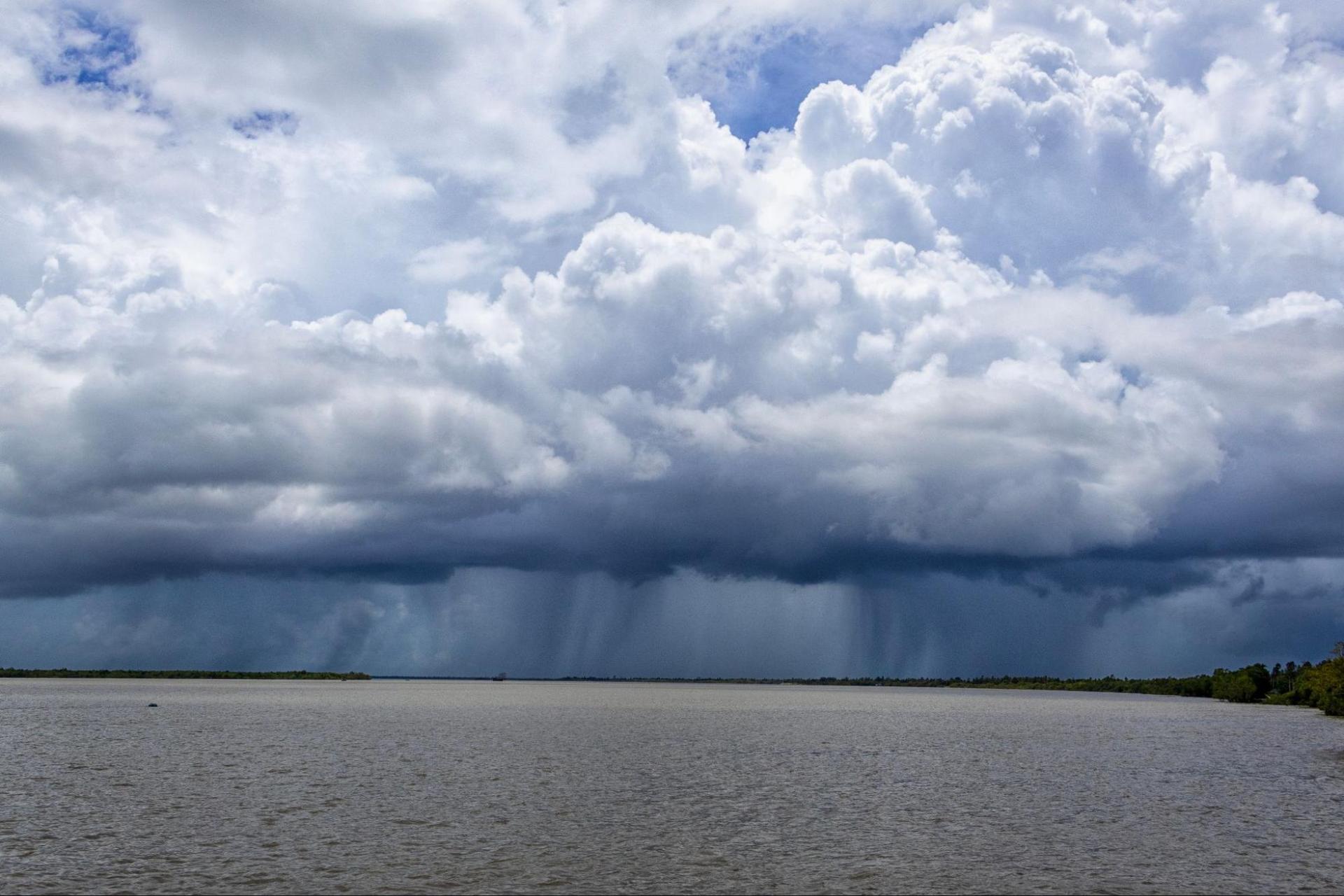
Extensive poaching and hunting during the British era (1757–1947) forced many species to go extinct, or at least locally. Although now they are seen as a serious offense, even that cannot reverse time and repair the damage they have caused. All we can do now is recognize their existence and protect what little we have left. Starting with:
Locally Extinct Animals
These creatures once roamed the muddy lands of Sundarban. Although tourists cannot see these magnificent creatures anymore, just knowing they exist makes this place even more special.
Indian Javan Rhinoceros (Rhinoceros sondaicus inermis)
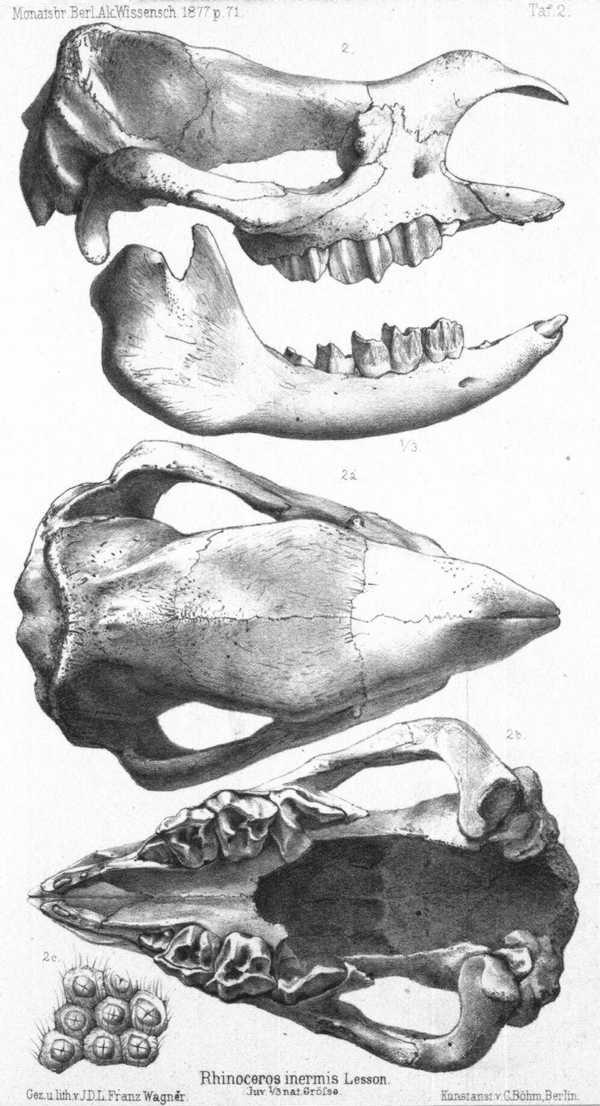
Also known as the lesser Indian rhinoceros, it is a semi-large hornless subspecies of the taxon. It had an elongated body compared to its Javan counterpart, with long and skinny legs, small eye sockets, and small hooves. Some argue that the males had horns while the females didn’t. But there is no written proof of that, except for the last female.
On November 17, 1828, the last female Indian Javan rhinoceros was killed in the Ganges Delta. Originally, the intention of poachers was to take anything, such as the skull or meat, that they could sell for money. But during butchering, they found an unborn baby inside the creature, which was later sold to international dealers.
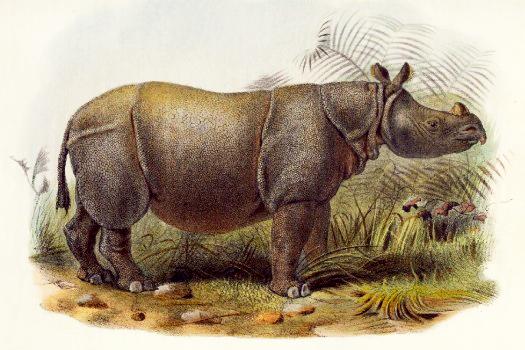
The last record dates back to 1836, when Friedrich Wilhelm III of Prussia purchased the specimen and donated it to a museum in Berlin, Germany. It is unclear whether the baby was alive after it was extracted from the womb, but by the time it reached a museum in Munich, Germany, in 1941, it was nothing but a preserved corpse. There are no accounts for a male species as of yet, and it is believed that the female killed in that incident was the only remaining survivor of the Indian Javan rhinoceros before its complete extinction.
Indian Asiatic Cheetah (Acinonyx jubatus venaticus)
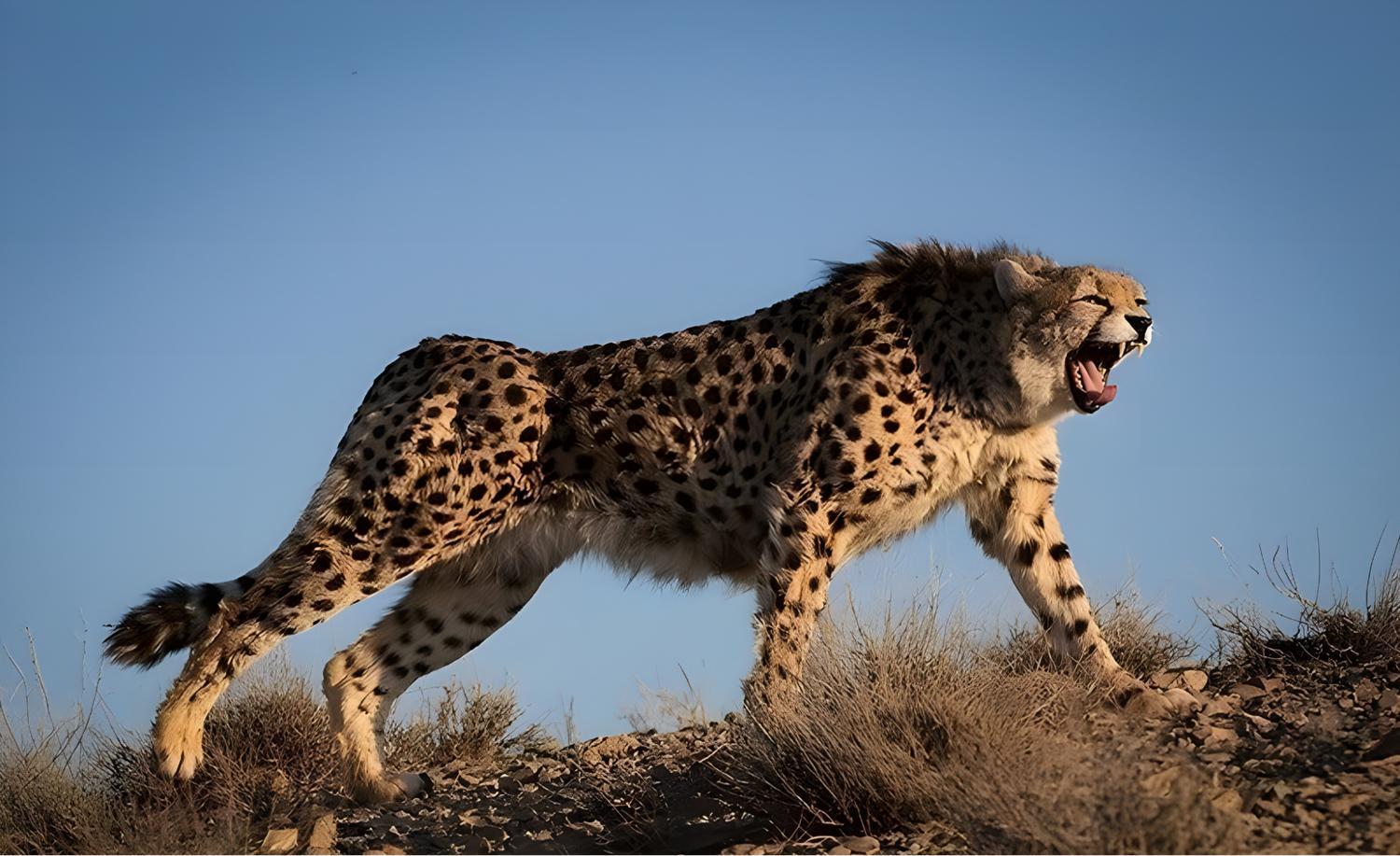
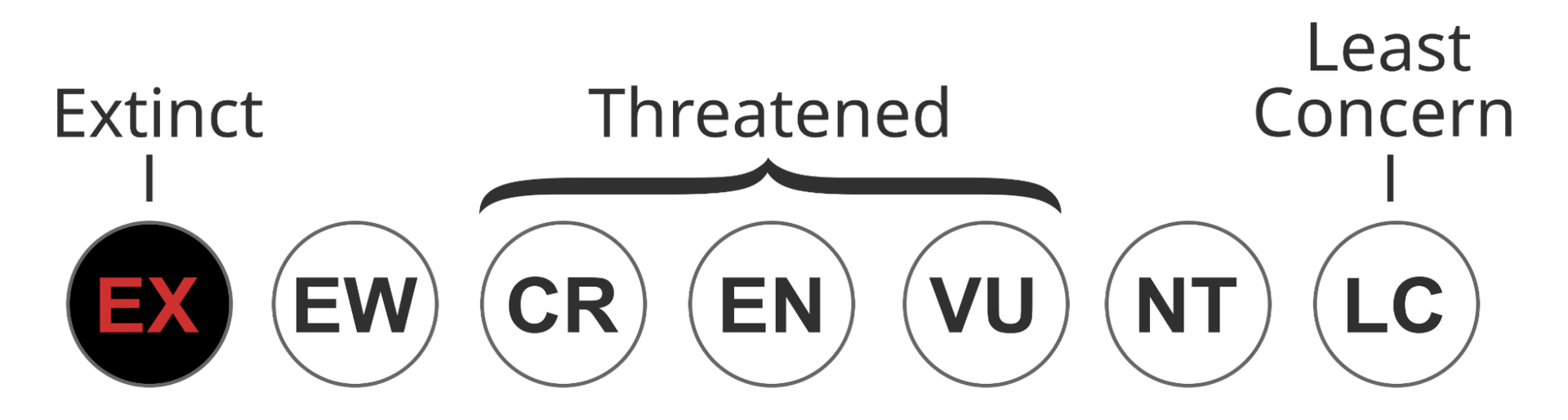
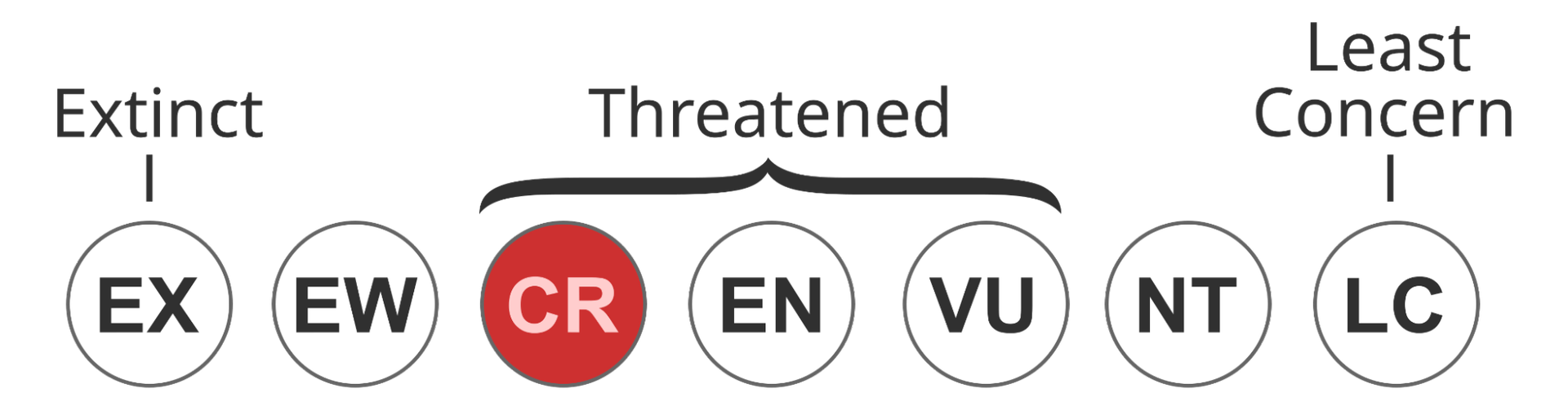
Less than 50 Asiatic cheetahs live today in Iran and are on the IUCN Red List (https://www.iucnredlist.org/) of critically endangered animals. While they may look similar to their African cousin, genetically they are completely unique. Between 32,000 and 67,000 years ago, a population of cheetahs split from Africa’s Savannah and crossed into Iran's deserts. Over thousands of years of isolation, they evolved into the Asiatic cheetah.
During the mid-16th century, King Akbar was introduced to cheetahs living in the desert areas of India. It is said that he trapped 1000 or more cheetahs for his personal enjoyment. Sadly, there is no clear historical mention of a sanctuary for these creatures, which suggests that they were kept in poor conditions and did not have a proper diet. This became one of the main reasons for the decline of cheetahs in India.
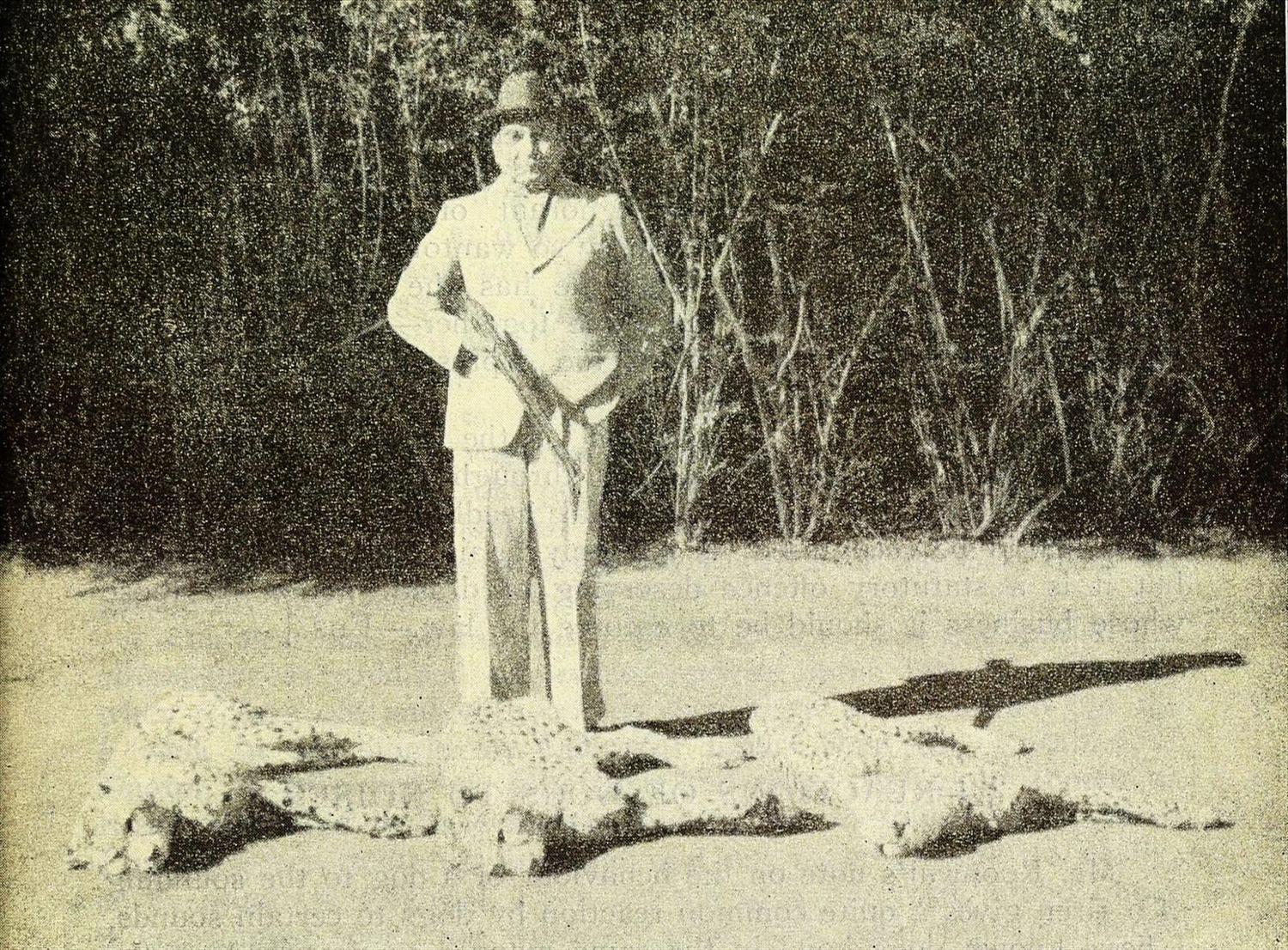
Some managed to survive in the Sundarbans, but during the rule of Britain, all remaining Indian Asiatic cheetahs were hunted down and used as a wall decoration. The last three remaining cheetahs were shot by the Maharajah (king) of Surguja in 1948, while the last female was spotted in 1951 in Koriya district, Chhattisgarh, and supposedly died alone soon after.
Endangered Animals
Many rare animals call this giant swamp home. Their numbers may not be that many, but their will to live is just on another level. This makes the Sundarban a haven for tourists, researchers, and environmental specialists from around the globe. And how can they not, after seeing magnificent creatures such as:
Bengal Tiger (Panthera tigris tigris)
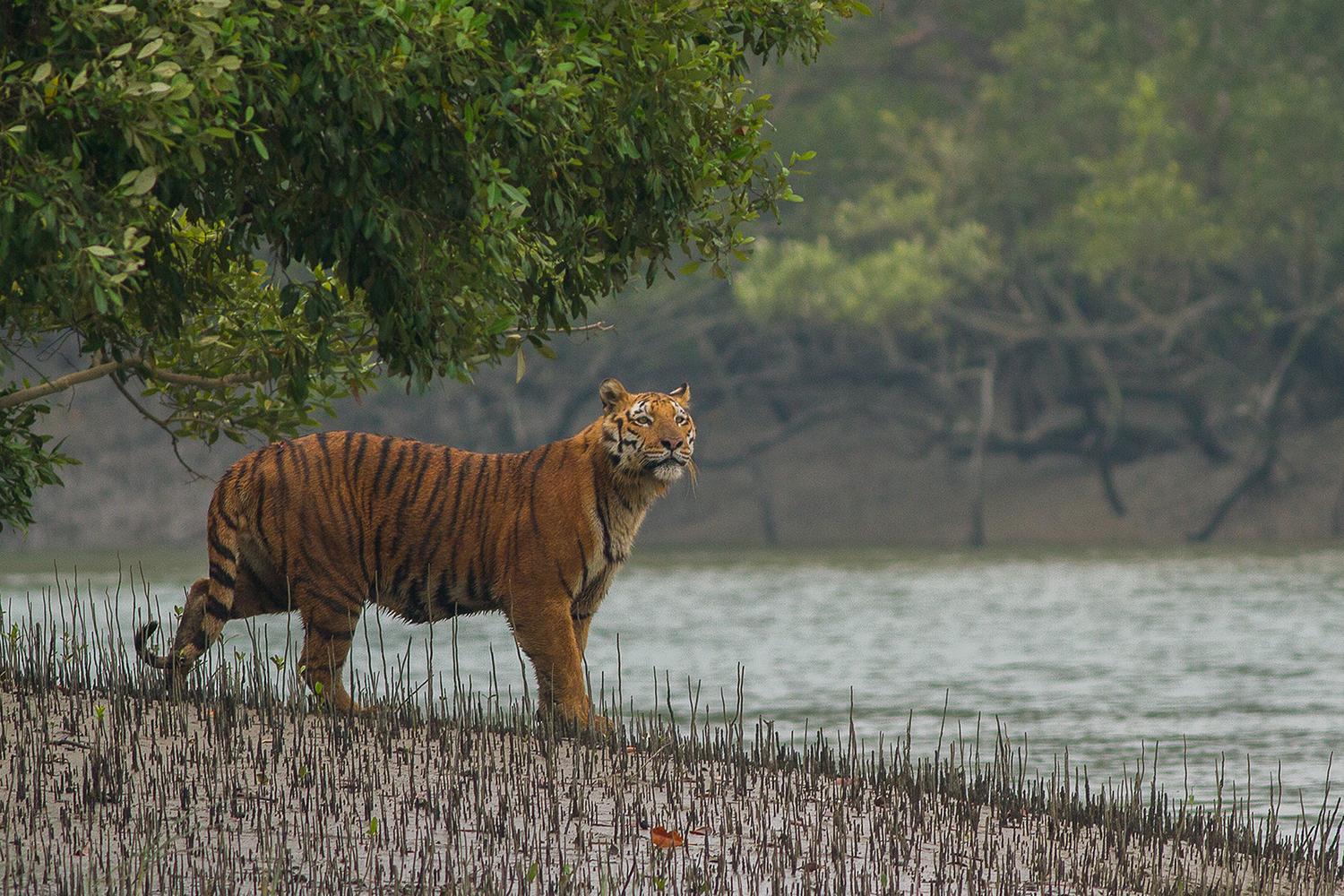
These massive wild cats can instill fear in a single glance and are the pride and joy of the Sundarbans. It is an important habitat for over 100 of these feline creatures, making it one of the biggest tiger reserves in India.
The roar of Bengal tigers can be heard from ferries as they hunt for prey such as the chital deer, Indian muntjacs, wild boar, and Rhesus macaque. These cats can weigh anywhere from 130 to 170 kg when young and 200–260 kg when fully grown.
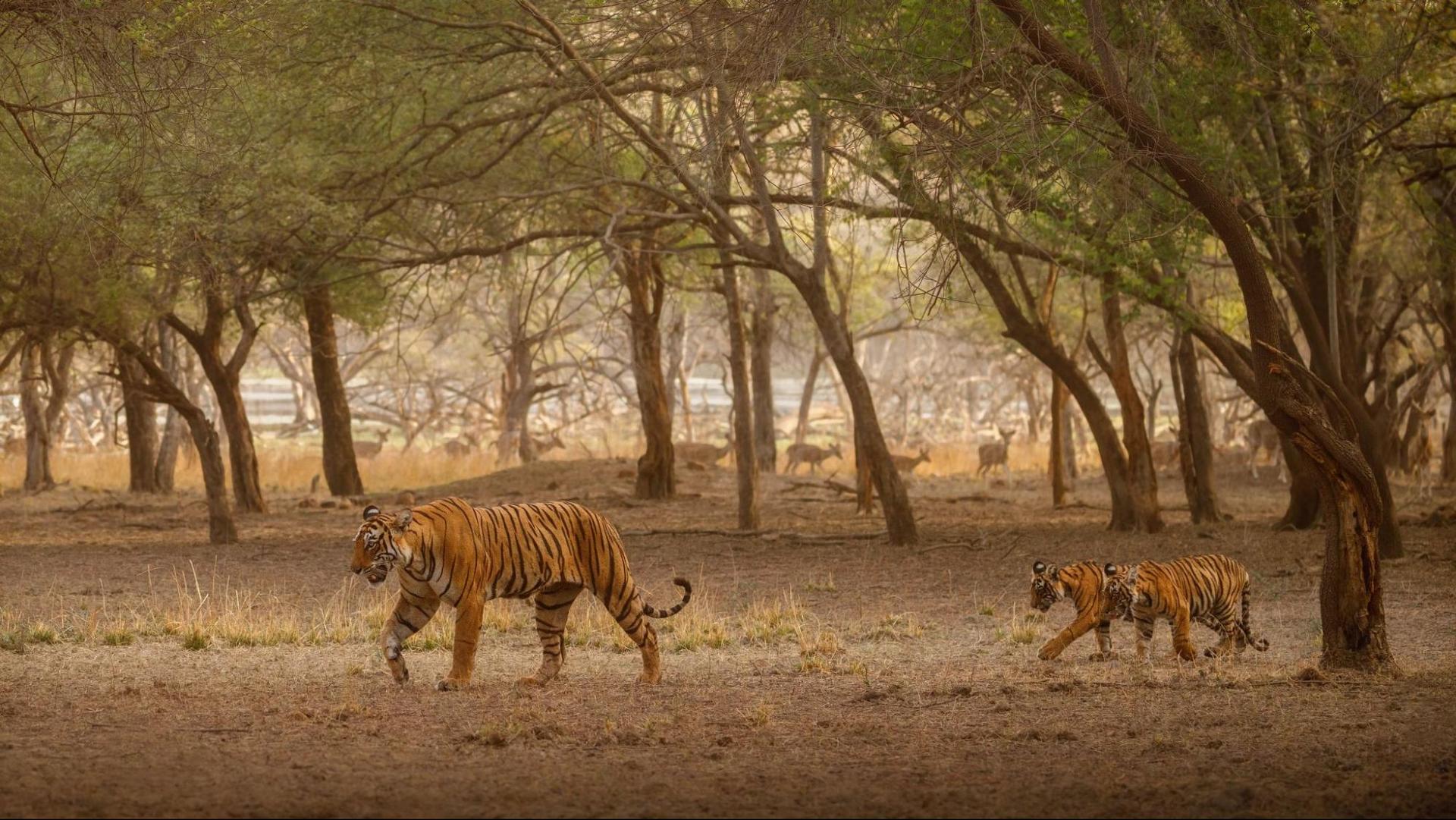
Females weigh about half as much as males and can be seen with tiny cubs after the breeding season. Cubs stay with their moms for up to 2 years, as they learn the basics of hunting, stalking, and how to protect themselves from other adult males during mating season. Because a male tiger won’t think twice before shredding cubs to shreds, except when they're his.
The Masked Finfoot (Heliopais personatus)
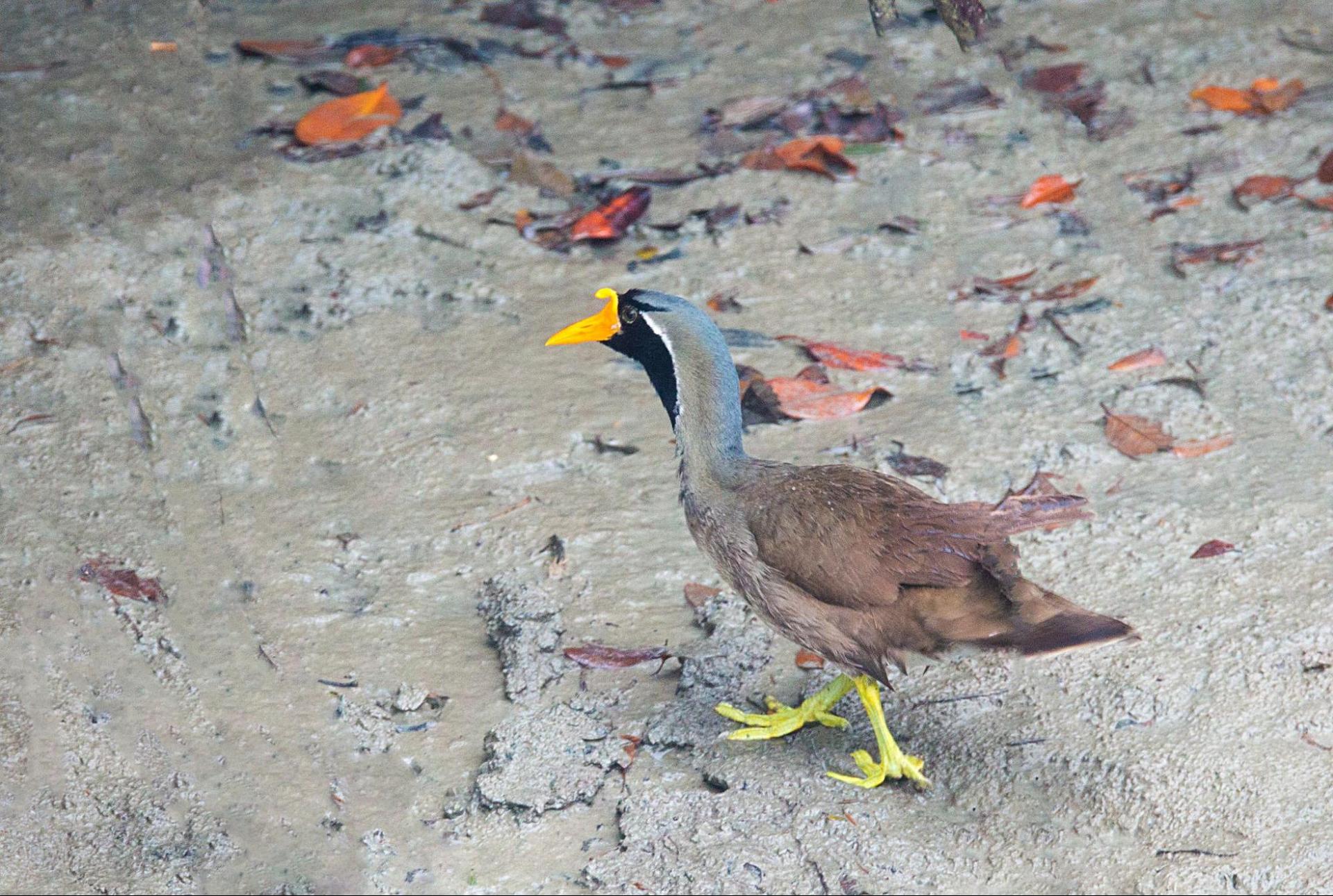
The masked or Asian finfoot is one of the critically endangered avian species in the world. Supposedly, only between 100 and 300 live as of now, out of which less than 10 survive on the Indian side of Sundarban. Like its sisters in Africa, the ancestral relations are poorly understood, making the conservation efforts even more dire. Some researchers say that they can be traced all the way back to the Old World during the mid-Tertiary era, or the beginning of the Ice Age.
The masked finfoots are known as the underwater specialists, all thanks to their long necks and sharp beaks, which allow them to hunt for fish with ease. Both male and female have green lobed feet, black masks and eyebrows stretching from the beak till the upper neck, pale breasts, and rich brown wings, tails, and backs.
Spoon-Billed Sandpiper (Calidris pygmaea)
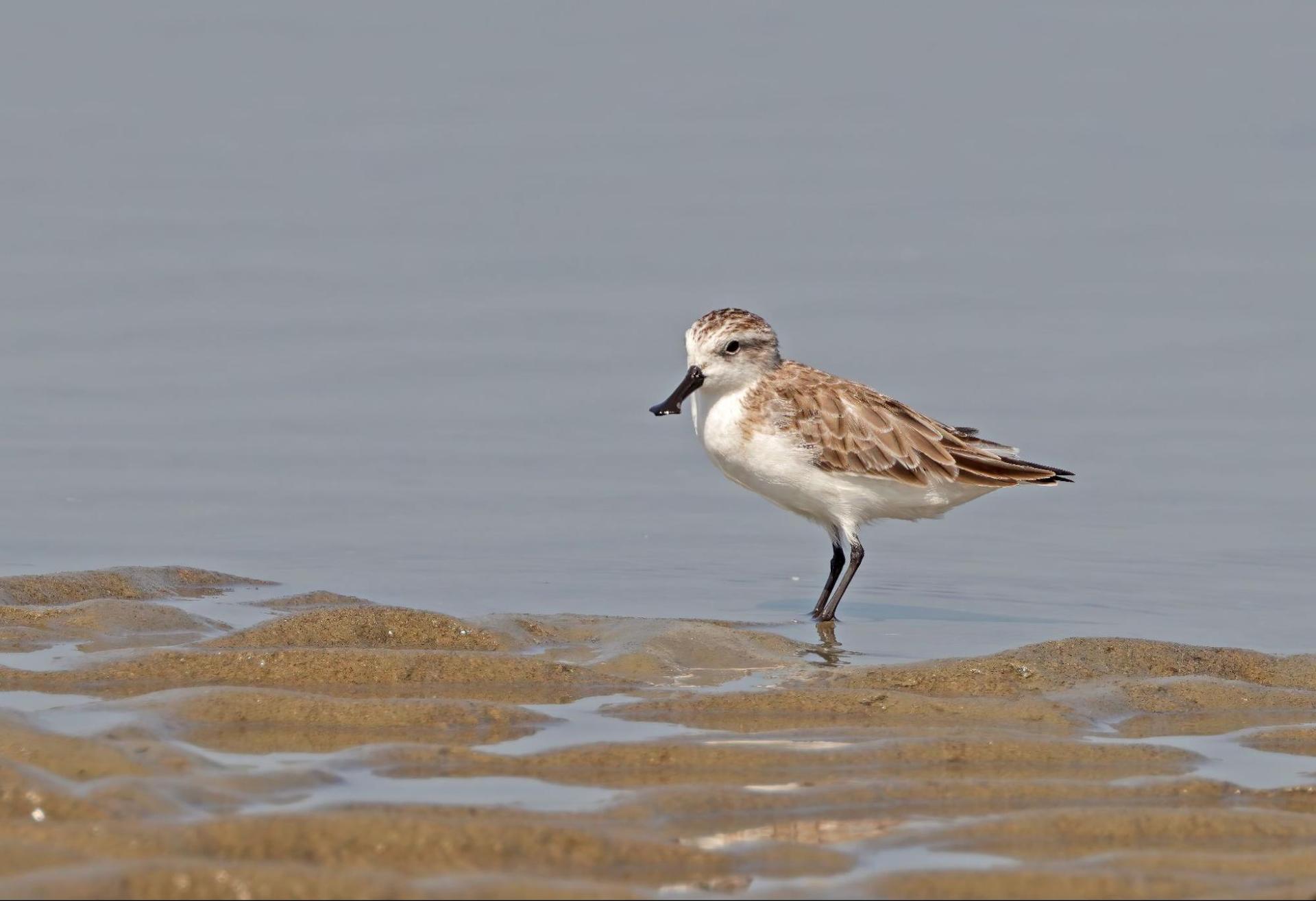
Just like the Masked Finfoot, the Spoon-Billed Sandpiper is yet another critically endangered animal with fewer than 200 pairs recorded in 2009–2010. Serious conservative measures rescued this species from entering the Near Extinction list, breaking the staggering 26% annual rate decline since 2000.
These migratory birds fly over 8000 km every year and reach the mangrove forest of Sundarban between June and July. They lay eggs in grass near a freshwater source, where they also feed on small insects like mosquitoes, flies, beetles, and spiders, along with moss near their nest, and sometimes marine invertebrates like shrimp and worms.
Ganges River Dolphin (Platanista gangetica)
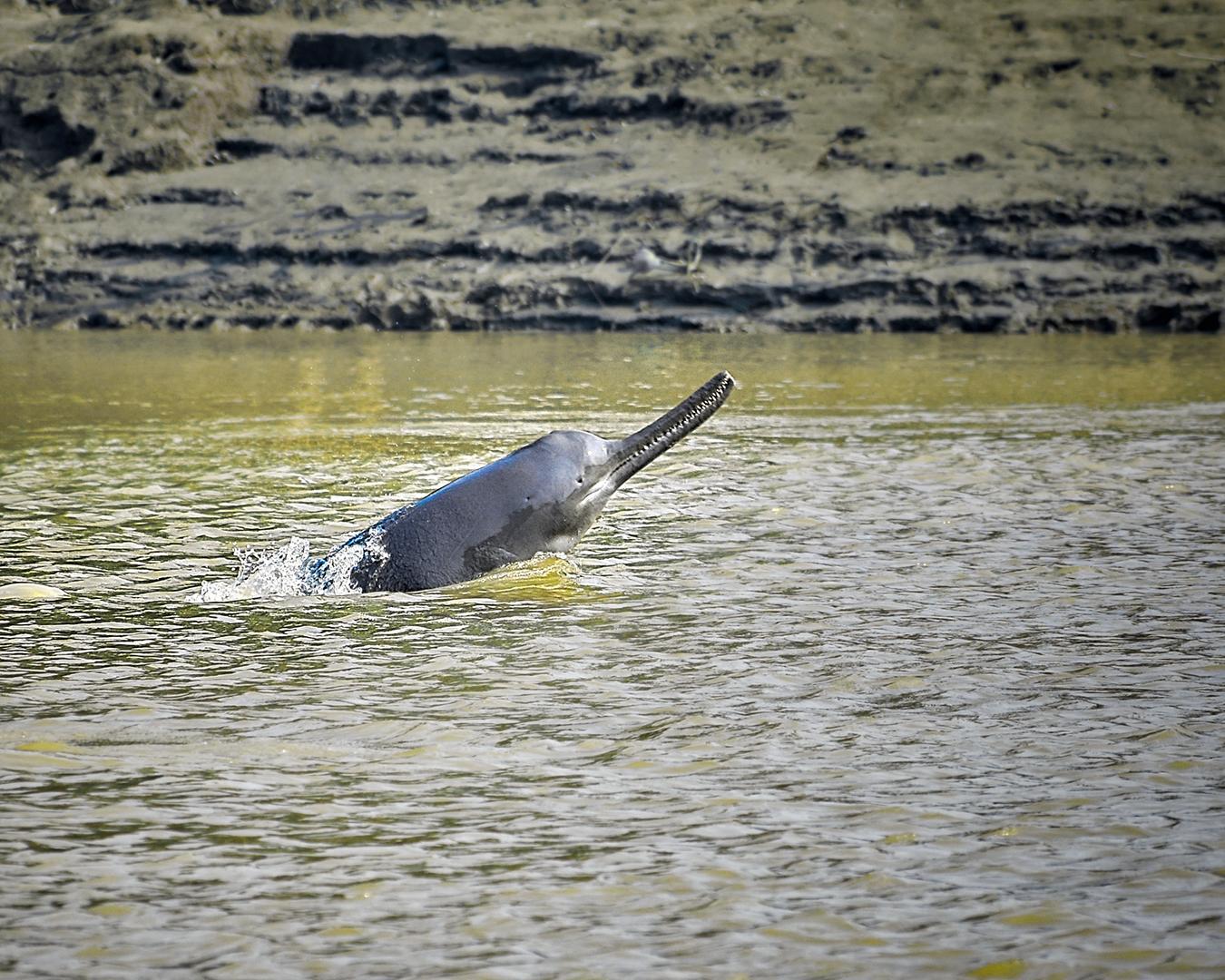
The Ganges River Dolphin is a species of freshwater dolphin that separated from the Indus River Dolphins around 550,000 years ago. These animals have light blue skin and a long, narrow mouth, similar to most freshwater dolphins. Females are larger than males, and couples occasionally swim in pairs, especially during the heat. Ganges River Dolphins do not follow a particular breeding season.
Unlike oceanic dolphins, the Ganges River Dolphin is shy, making observation efforts quite difficult. Nonetheless, tourists can still see them poking their heads out to breathe with enough luck and patience.