
On the cover: Spiti river and valley, Himachal Pradesh by In Transit
.jpg)
There is a moment, somewhere past Kunzum La, when the greens slowly disappear. It feels like you are still in Lahaul one minute, surrounded by pine trees and river mist just like any other road trip in the Himalayas, the next you find yourself seeing rust-colored and ash-colored mountains with the sky being within the reach of your hand. The region appears to be cut off from any modern day civilization because instead of the noise of the city there are prayer flags fluttering around and the beauty of ancient mudbrick monasteries. This is your way into Spiti, a high altitude desert wedged between India and Tibet. People generally refer to it as “little Tibet”. Spend five minutes there and you will realize that they are not wrong. From geology to its living soul it is indeed a piece of Tibet seamlessly preserved on the Indian side of the border.
Getting into the high altitude sanctuary: how and when
There are generally two ways in, the Manali route climbs over Kunzum La, a high pass so dramatic it feels that the mountains are showing off but it only opens from roughly June to early October; Low temperature shuts the whole thing down otherwise. The Shimla route through the Kinnaur valley is the reliable friend; it's longer, gentler and opens far more of the year.
Summer (June to September) is Spiti at its friendliest, the temperature lies somewhere between 10° C and 25° C and green in a handful of places. October sharpens the light and thins out the crowds with your fingers going numb after the dark. Then there is winter (December to February) when the Manali road closes entirely, temperature nosedives below zero and the valley turns into a frozen world. It is brutal but if you are looking to spot snow leopards around Kibber village this is the time to be there.
The monastic circuit
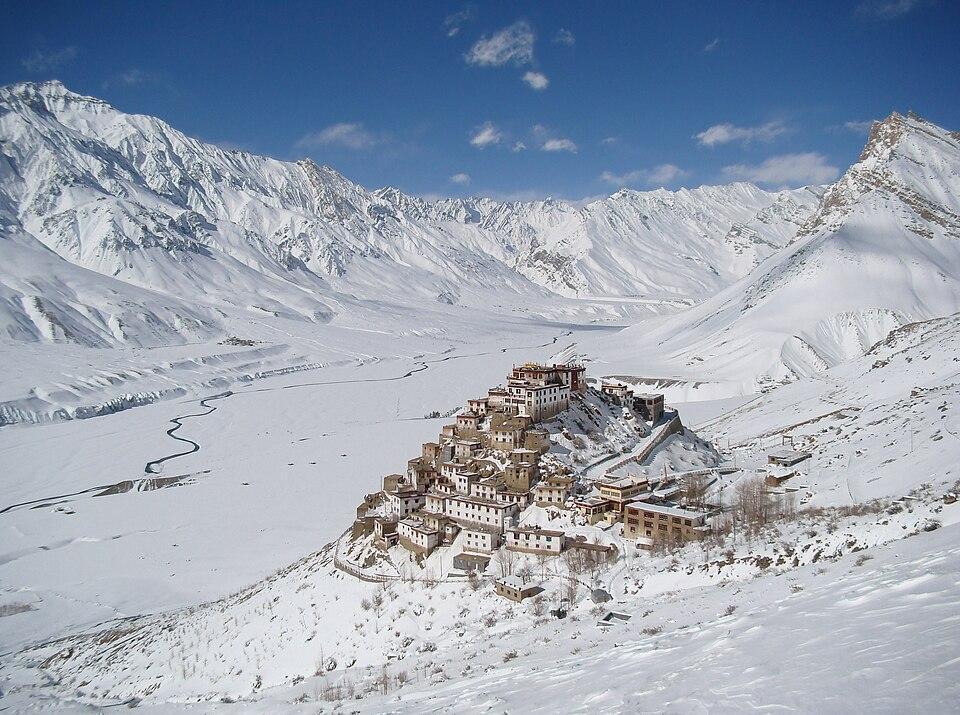
Key Monastery is where everyone starts. It is Spiti’s oldest and largest, founded in the 11th century by Dromtön, a student of Buddhist master Atisha. Perched around 13,668 feet it looks less like it was built and more like it grew out of the hill side in messy, whitewashed layers. The physical evidence of a millennium of Mongol invasions, military campaigns, shocks of nature and monks rebuilding everything once more. Go up the slander stairs and you will enter prayer rooms decorated with thangka paintings and musical instruments older than most nations.
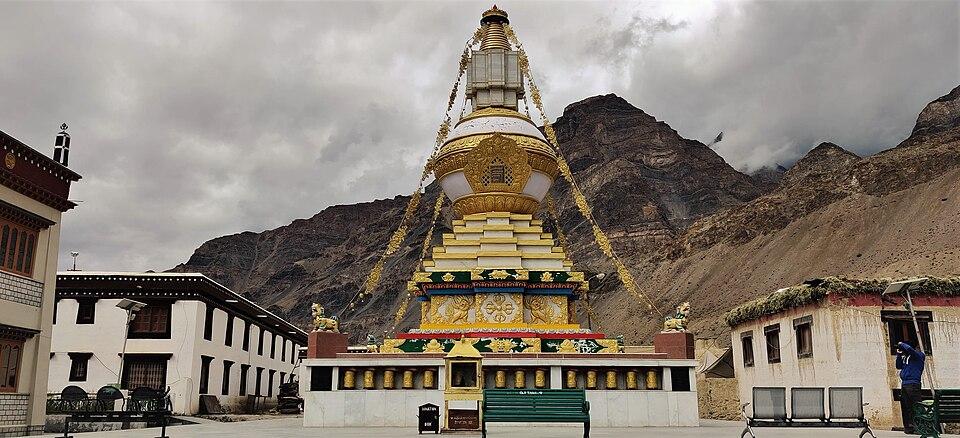
Tabo is the quieter flex. From the road it barely registers; just low clusters of mud-brick buildings sitting flat in the valley, which somehow makes it more impressive once you are inside. Founded in 996 CE by the translator Rinchin Zangpo, it is considered the oldest continuously operating Buddhist monastery in India and the Himalayas. Its murals are over a thousand years old blending Indian, Kashmiri and Tibetan styles nobody's quite replicated since; earning the nickname “Ajanta of Himalayas.” However it has been sitting on UNESCO’s tentative list for years, proposed but never formally inscribed. Sit on the floor of the old assembly hall, let your eyes adjust to the dark and give it real time; it might become the most peaceful experience you’d ever have.
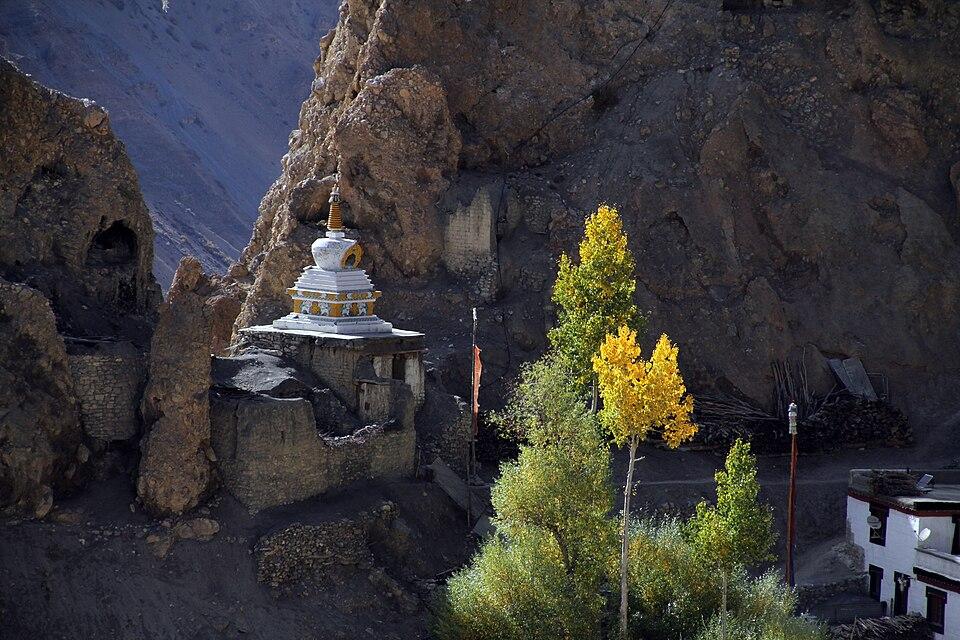
Then there is Dhankar, the one that might end up as your phone’s lock screen: a cluster of ancient mud structures balanced on a 300 meter spur directly above where the Spiti and Pin rivers meet with a drop that makes your stomach lurch even from a very safe distance. Down in the Pin Valley, Kungri monastery holds down the Nyingma (Red hat), a sect of Tibetan Buddhism with architecture as vivid as its traditional masked sword dances.
The high-altitude villages
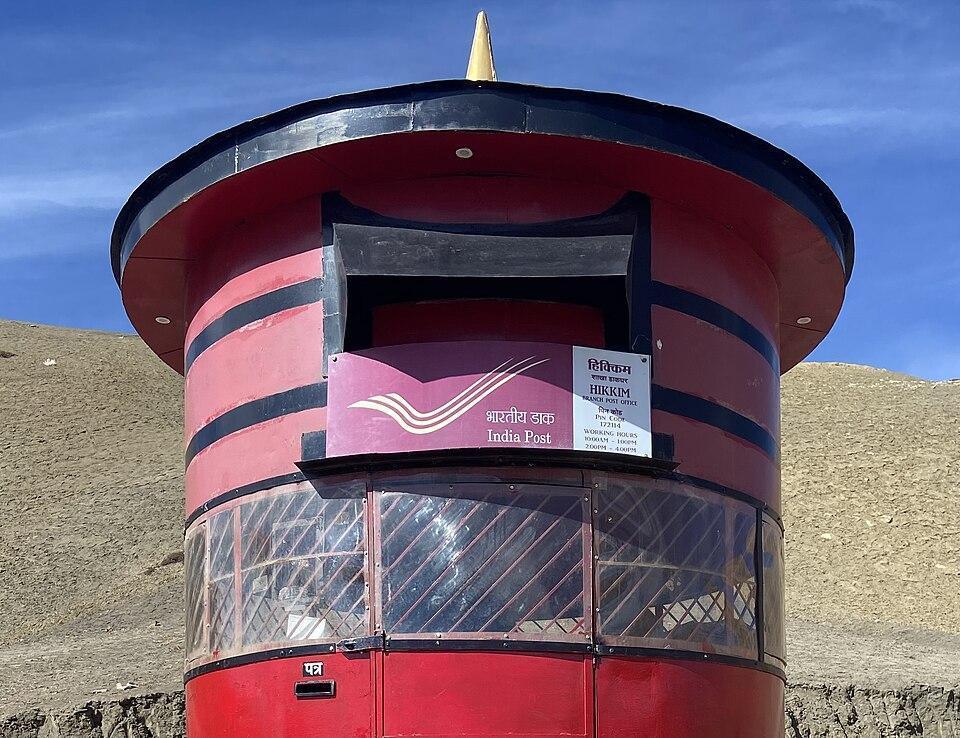
This is the part of Spiti where you stop being a tourist and start being genuinely confused about how anyone lives up here year round. Komic holds the record of highest village in Asia, reachable by motorable roads at around 15,027 feet, home to the world's highest post office sitting somewhere around 14,500 feet. People genuinely make the trip just to handwrite a postcard and mail it from the roof of the world, a ridiculous ritual that never once feels like a waste of time.
Langza announces itself with the massive golden Buddha statue staring over the valley and earns its “Fossil village” reputation from the marine fossils scattered across the surrounding slopes, leftovers from the Tethys sea which covered this entire region long before the Himalayas decided to exist. Kibber and Chicham, connected by a suspension bridge widely cited as Asia's highest hanging over a roughly 1,000 foot gorge at somewhat near 13,600 feet. Demul and Lhalung offer a quieter version of the same magic with community run solar power and home stays instead of crowds. Mud, the last village the road reaches, in the lush green Pin Valley, is where the serious trekkers go off towards the Pin Parvati pass.
Wonders of nature and wildlife
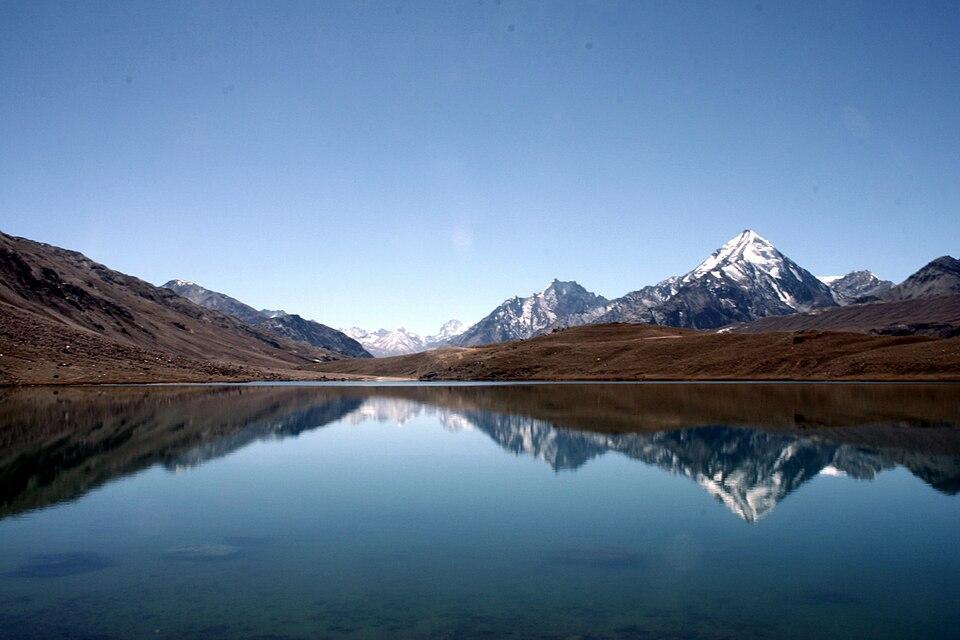
Chandratal, the “Moon lake,” is the reward at the end of a genuinely long drive: a crescent of water around 14,100 feet that shifts from turquoise to deep blue depending entirely on the sky's mood that day. You can camp a short walk from the shoreline and on a clear night the stars here are borderline unfair; this is one of the last places in India with the sky still looks the way it's supposed to.
The Kibber wildlife sanctuary takes snow leopard tracking seriously along with sightings of Tibetan wolves, blue sheep and ibexes; January through March is the peak season for spotting the “Ghost of the mountains” against fresh snow. In Gue village, near the Indo- Tibetan border there is something stranger waiting: the roughly 500 years old mummy of monk Sangha Tenzin preserved without a single chemical, just the valley’s brutally cold and dry air doing what it does best.
Culture, faith and everyday life
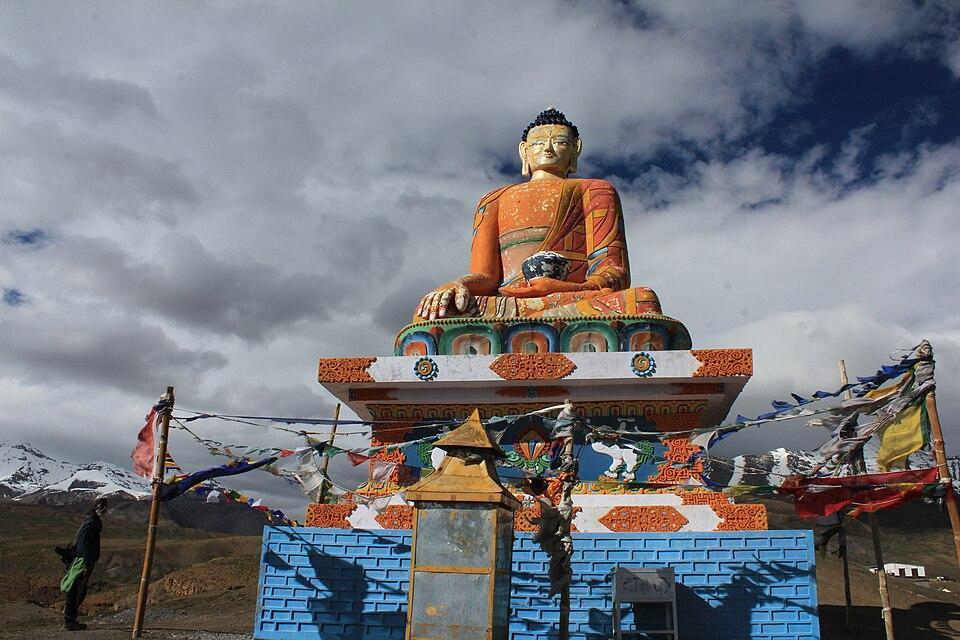
Spiti runs on Tibetan Buddhism, specifically its Bhoti tradition. Prayer flags flutter on nearly every roof top, mani stone carved with sacred inscriptions guard the entrance to villages and for generations families here sent their elder son to train as a monk. Winters bring the Losar (New Year) winter celebrations festival. It features the sacred Cham dance: monks in widely elaborated, fierce papier-mâché masks representing protective deities and dancing evil spirits out before the new year arrives. The Ladarcha fair in Kaza has a completely different back story: it started as a trade fair when merchants from Tibet, Ladakh and Rampur once met to do business and it has since grown into a full cultural festival of local sports, dance and craft.
Even the houses are built for survival first, everything else second. Homes go up in rammed earth and sundried mud-brick thick enough to fight off winters that drop around -30° celcius with roof stacked in dry twigs and grass as backup cattle food for the months snow traps the whole village indoors together; sounds less like a hardship and more like the most intense neighborhood bonding exercise imaginable.
You can come to Spiti for the landscape, obviously it's the whole pitch. However it is the postcard mail from Hikkim, the ten minutes spent staring at a thousand year old mural in Tabo, the cup of chang handed to you by someone you met an hour ago that you’ll actually be thinking about a year later.