
On the cover: The Ganga, the hills and the bridge by Jasmine Kaur
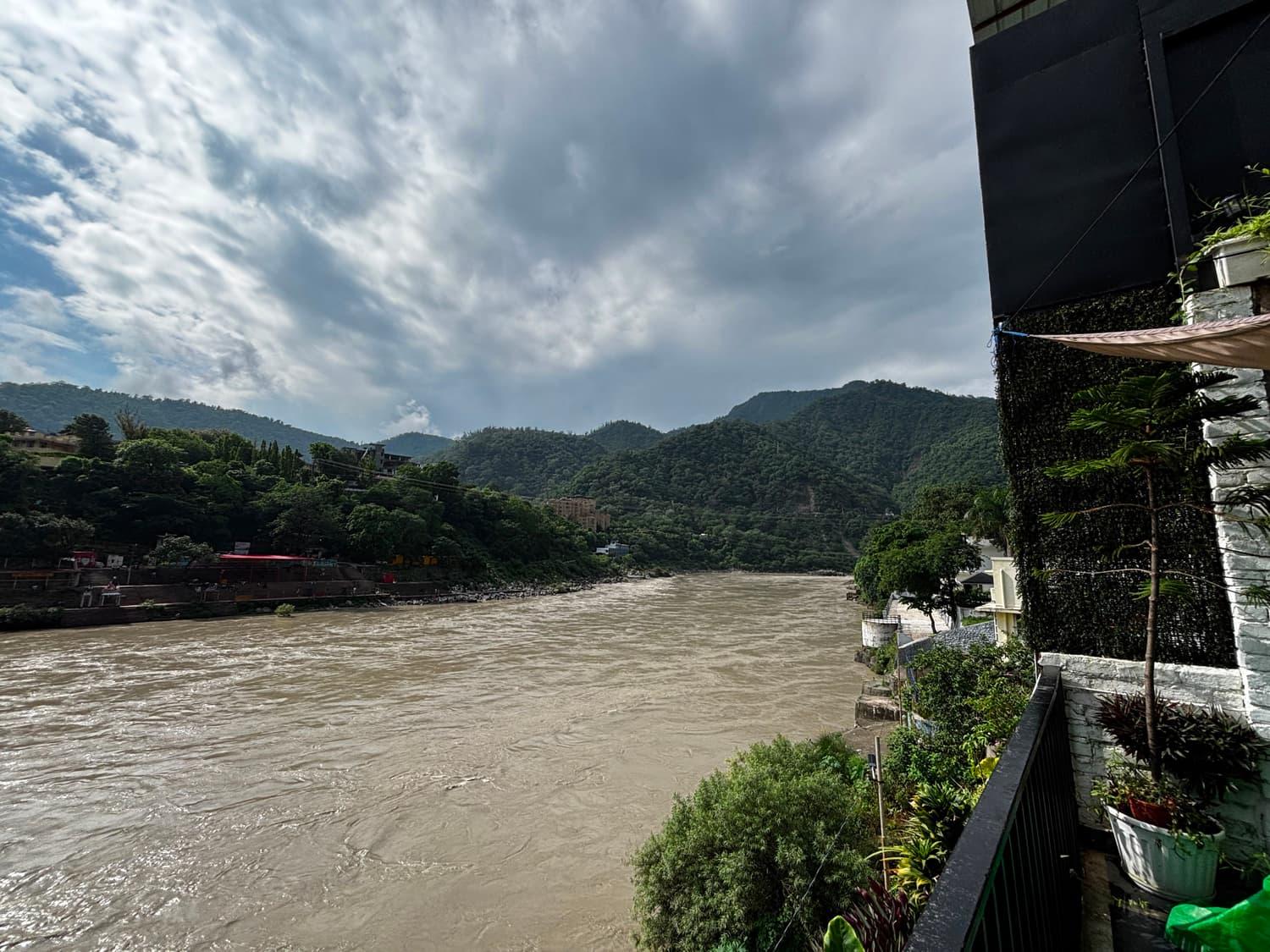
The first thing Rishikesh does to you is collide with your idea of what a river is supposed to be. You might think, a river’s just a scenery or something you glance at on your way to somewhere else. But, here, the Ganges is the whole plot. It runs the colour of milky tea after a monsoon rain, moves fast enough to argue with you and pretty much everything worth doing in this town exists because that water is right there. The bridges across it. The ashrams face it. The cafes angle every table towards it and every single evening a whole crowd gathers at its edge holding fire as a form of devotion (Ganga Aarti). People call this place the “yoga capital of the world” and, most famously, “the place of sages.”
To Rishikesh!
The place sits exactly where the Ganges leaves the Himalayan foothills and starts its long crawl across North India, specifically at the point where the Ganges meets the smaller Chandrabhaga river, about 24 km upstream from Haridwar. This location has a double duty: it's also the traditional starting point of the Char Dham Yatra (the pilgrims circuit to the four Himalayan shrines of Yamunotri, Gangotri, Kedarnath and Badrinath), which is why the town has such a heavy pilgrim traffic mixed in with the yoga crowd.
October through March is the sweet time to be there, when the daytime temperature sits comfortably between 55°F to 85°F, skies are clear and drafting season is in full swing. It's advisable to skip May and June since temperatures climb up to 104°F and turn sightseeing into a survival sport. July through September brings the monsoon: it's dramatic, green and occasionally shut down by mudslides on the mountain roads. But if yoga is your whole reason for coming, February through May is your window and the International Yoga Festival at Parmarth Niketan is worth building a trip around.
The Bridges
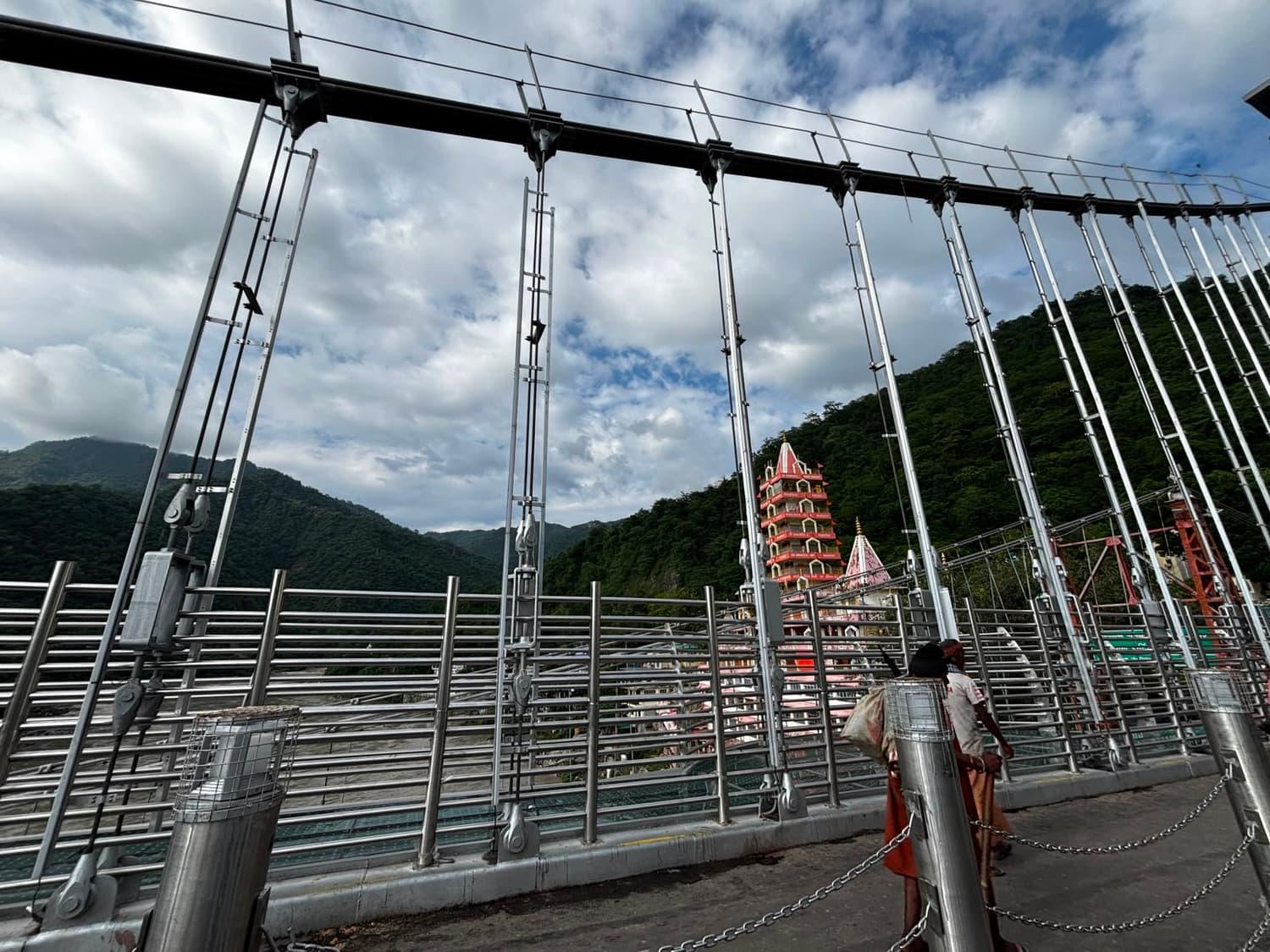
Rishikesh runs on two famous suspension bridges, a couple miles apart and they have each got their own attraction. Lakshman Jhula is the older and more photogenic one. It's a 450 foot iron bridge whose cables fan out overhead like ribs on a giant umbrella. Local legends say this is the exact spot where Lakshman, the younger brother of lord Rama, crossed the Ganges using nothing but two jute ropes, which makes the modern iron version seen as a serious upgrade. Right next to it stands the stacked Trayambakeshwar temple, also known as Tera Manzil (thirteen floors), the temple has 13 floors and each floor is dedicated to a different deity, so it functions less like a single temple and more like a vertical tour of Hindu pantheon.
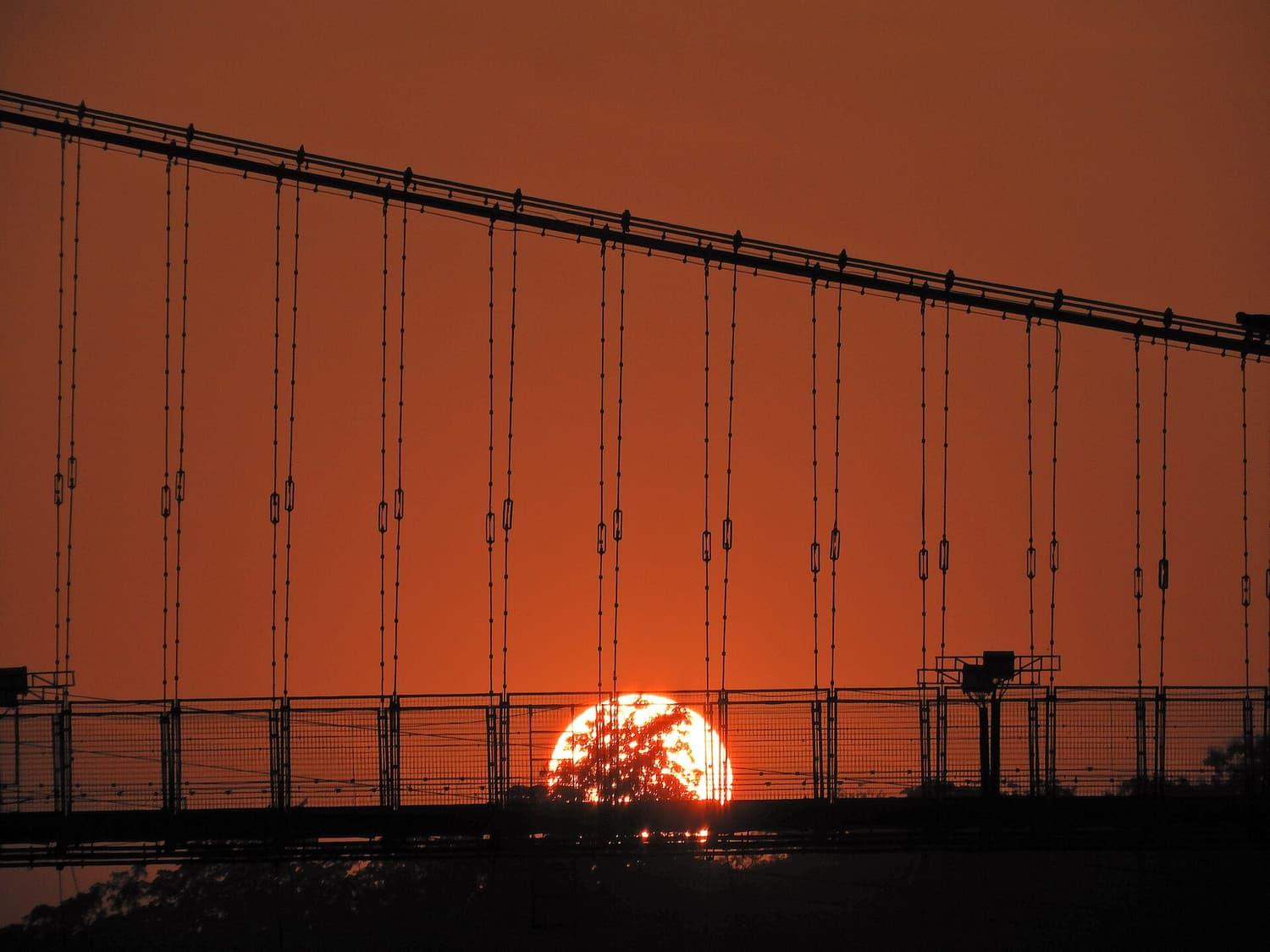
Ram Jhula, a couple miles downstream and built decades later in the 1980s, connects the Sivananda Ashram side to Swarg Ashram and it's the workhorse of the two; busier, lined with ashrams, bookshops and cafes on one bank. Both bridges bounce under your feet as you walk across them. Make sure to enjoy the sunset there.
Triveni Ghat And The Ganga Aarti
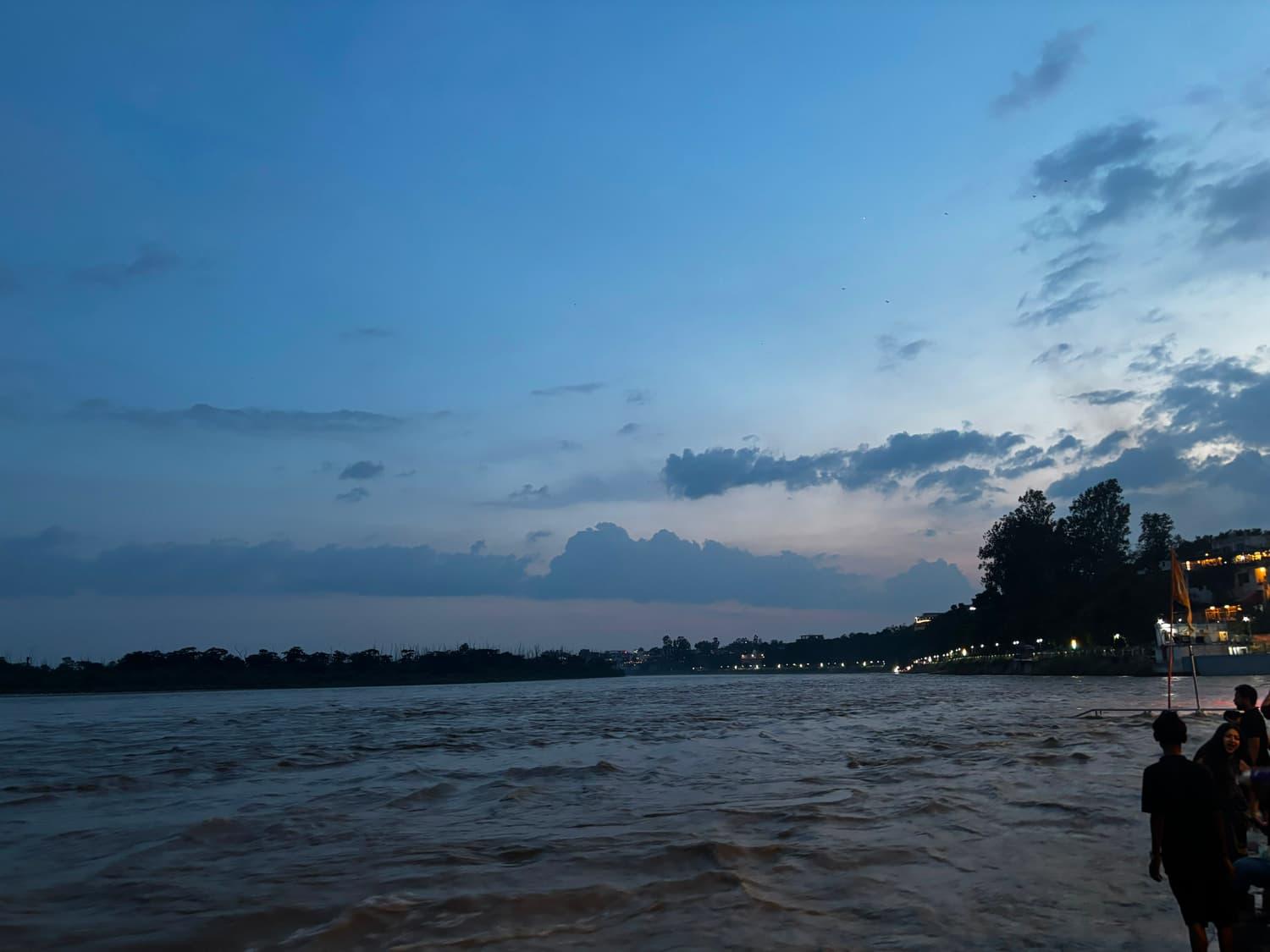
The Ganga Aarti at Triveni Ghathis is an experience you cannot afford to skip when in Rishikesh. Every evening, priests in saffron robes line the steps and perform a fire ceremony in front of the river, swinging tall brass lamps in slow circles while the crowd chants and incense drifts over everyone. Be sure to get there early and grab a spot on the steps instead of watching from the back because the flames reflected on the moving water are the entire point.
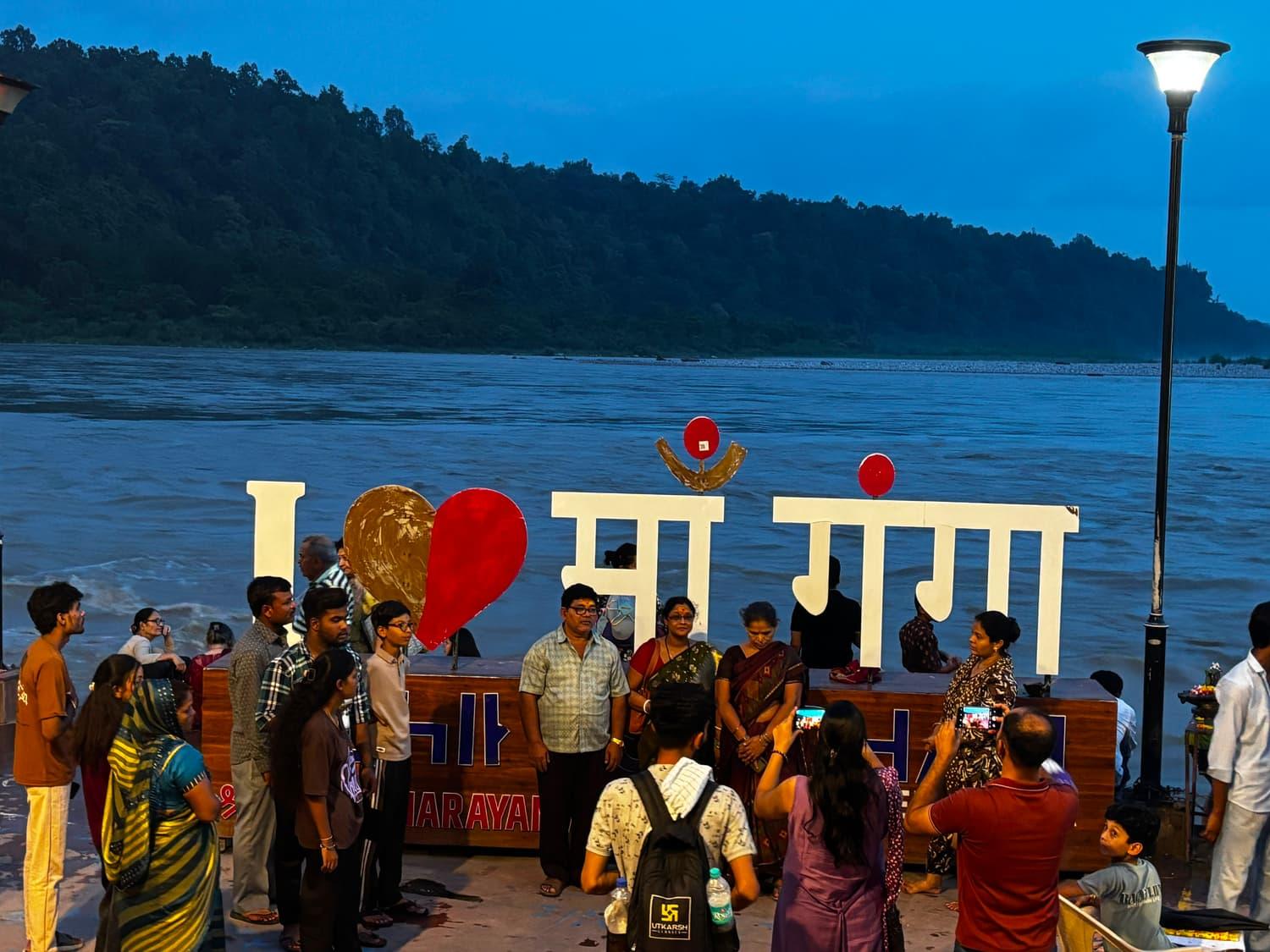
Once the ceremony wraps, the ghat fills with families doing what families do everywhere at golden hour, taking pictures. Rishikesh leans all the way into this with an “I love Ganga Maa” sign set up right by the water and everyone, no exception, lines up for a shot.
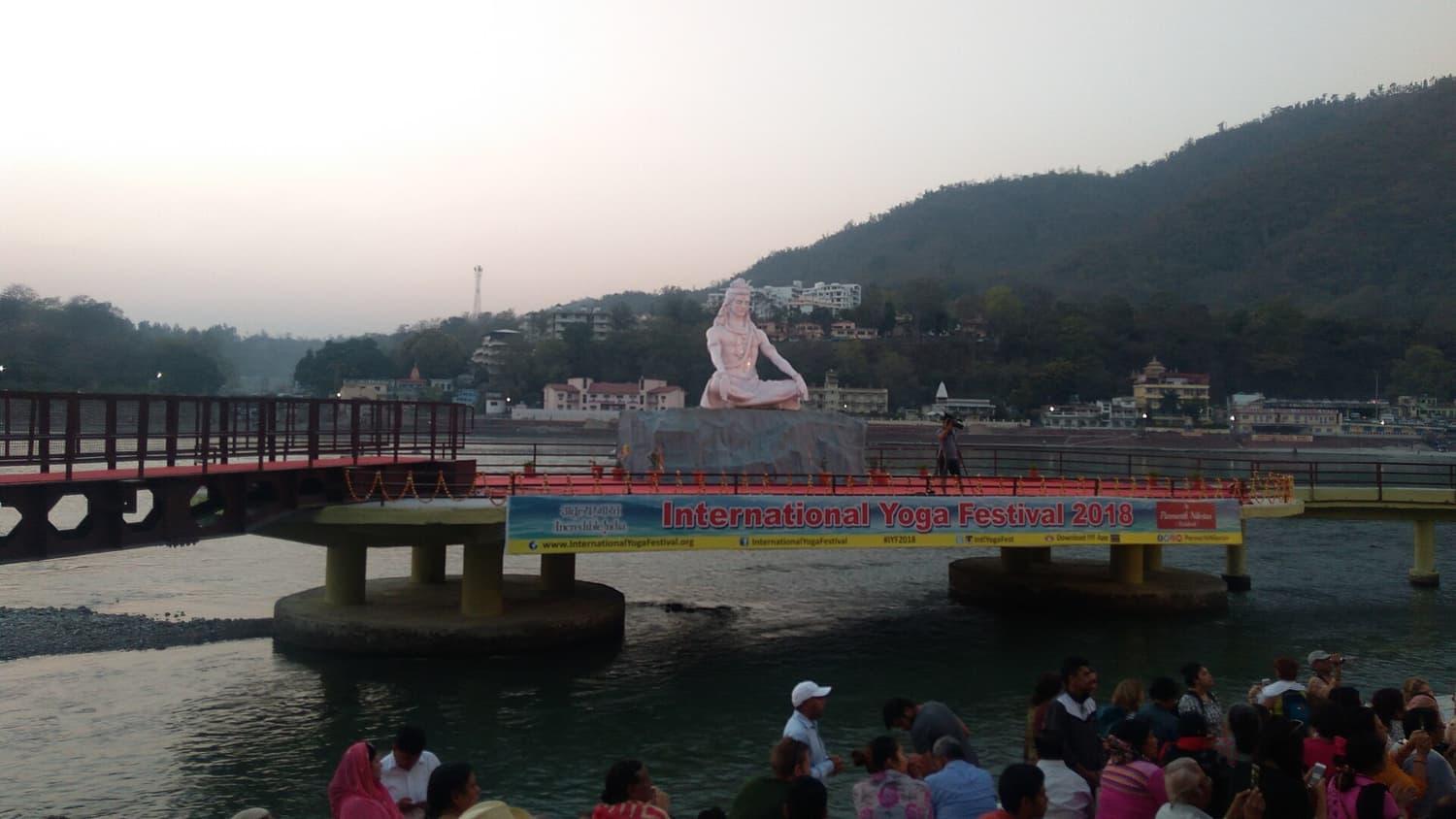
If you want a second aarti with a different feel, Parmarth Niketan, upstream near Ram Jhula, runs its own version most evenings. It's more musical and rehearsed than Triveni Ghat’s, young Gurukul students in bright yellow robes lead the crowd through devotional hymns rather than the more free form ritual downstream, and it tends to be the easier one for a first timer to actually follow along with.
The Beatles, Bungee Jumps And Everything In Between
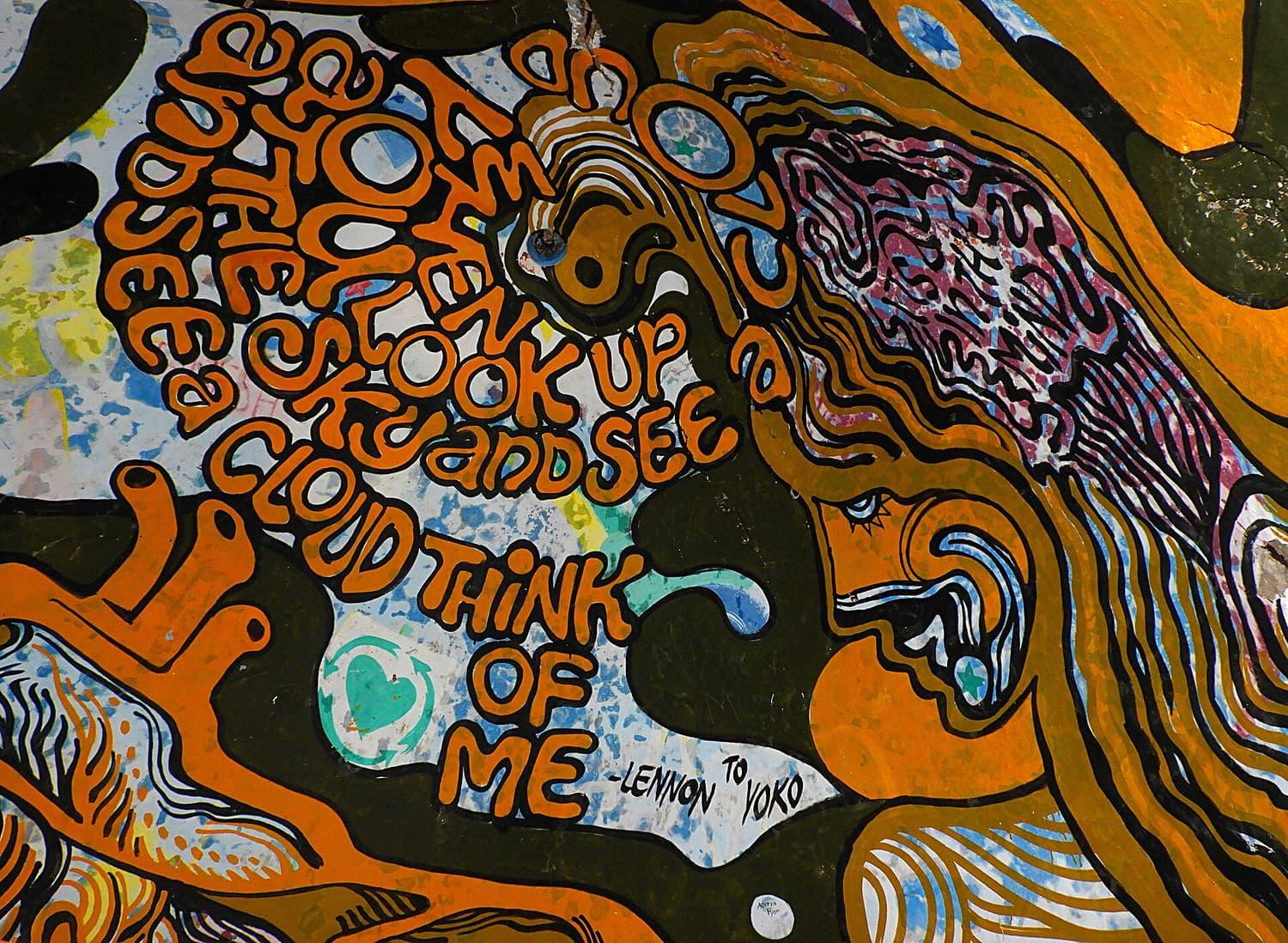
Rishikesh went global in 1968, when the Beatles showed up to study meditation at Maharishi Mahesh Yogi’s Ashram, now called The Beatles Ashram or Chaurasi Kutia. The old buildings are half swallowed by jungle and half covered in fan painted murals and Beatles lyrics, which somehow makes the place feel more real than a polished museum ever could. It's less about the architecture and more about standing in the actual room where “Dear Prudence” was reportedly written.
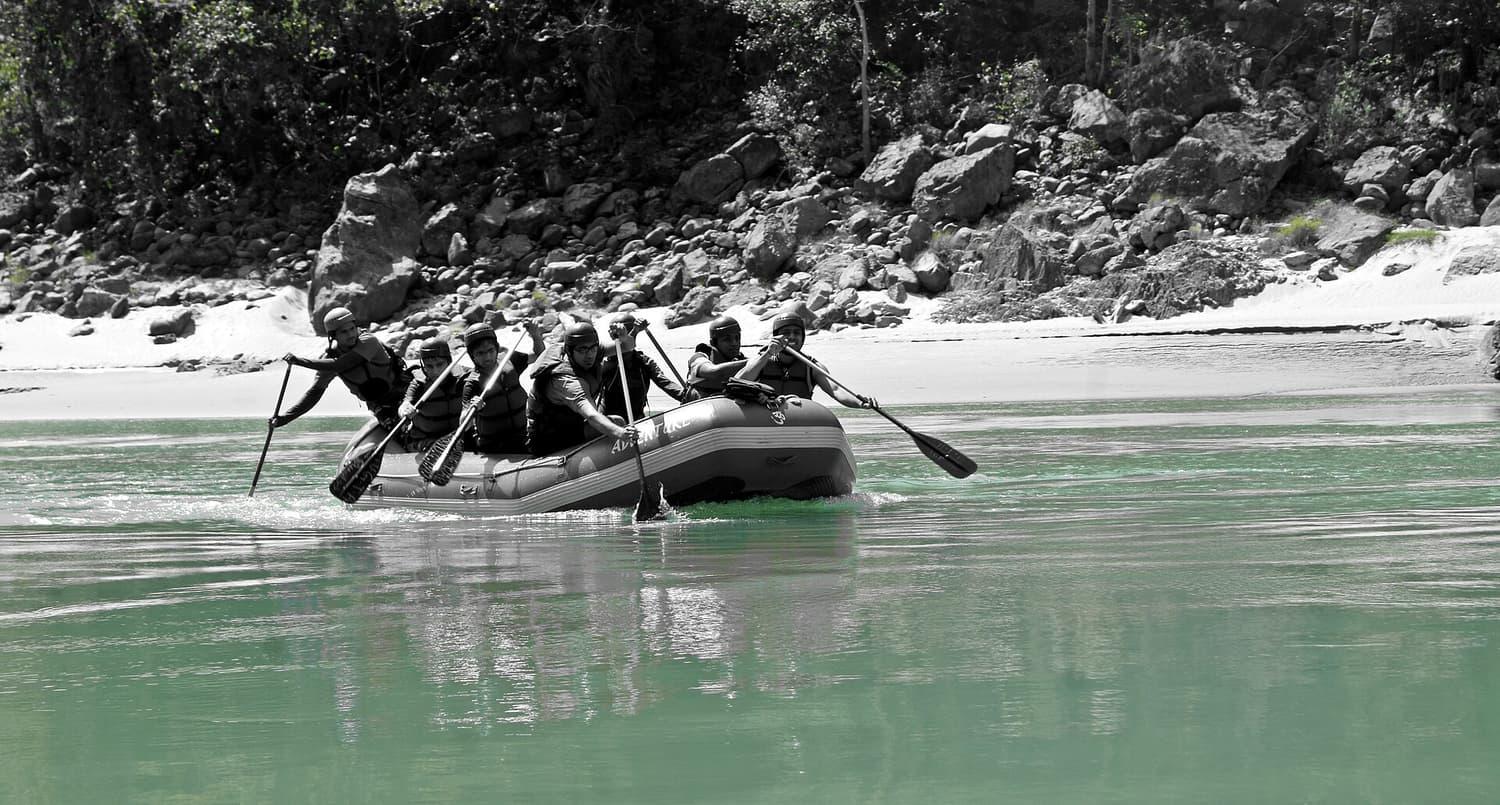
If you are the adventurous type, Rishikesh doubles as north India's white water rafting hub and the Ganges here is split into stretches by difficulty, so you can pick your own adrenaline and level. Brahmapuri to Rishikesh, a gentle 9 km of Grade 1 and 2 rapids, is the beginner friendly option. The Shivpuri stretch, 16 km with rapids known as “Rollar coster” and “Gold course,” is the most popular middle-ground choice and usually includes a stop for cliff jumping. Push further to the Marine drive stretch, 26 km including a rapid called “Three blind mice,” or if you actually want to be humbled, the Kaudiyala stretch, home to a grade 4 plus rapid called simply “The wall” that flips experienced rafting teams on a regular basis.
For something that skips the water entirely, jumping heights at the Mohanchatti runs India's highest fixed platform bungee jump, dropping 83 meters off a cantilever platform built out over a rocky cliff with safety standards set by New Zealand trained experts. You get a “Dare to jump” certificate afterwards, which is either a nice souvenir or a slightly aggressive way to remember the worst 10 seconds of your trip depending on how the jump goes.
The White Sand Beach
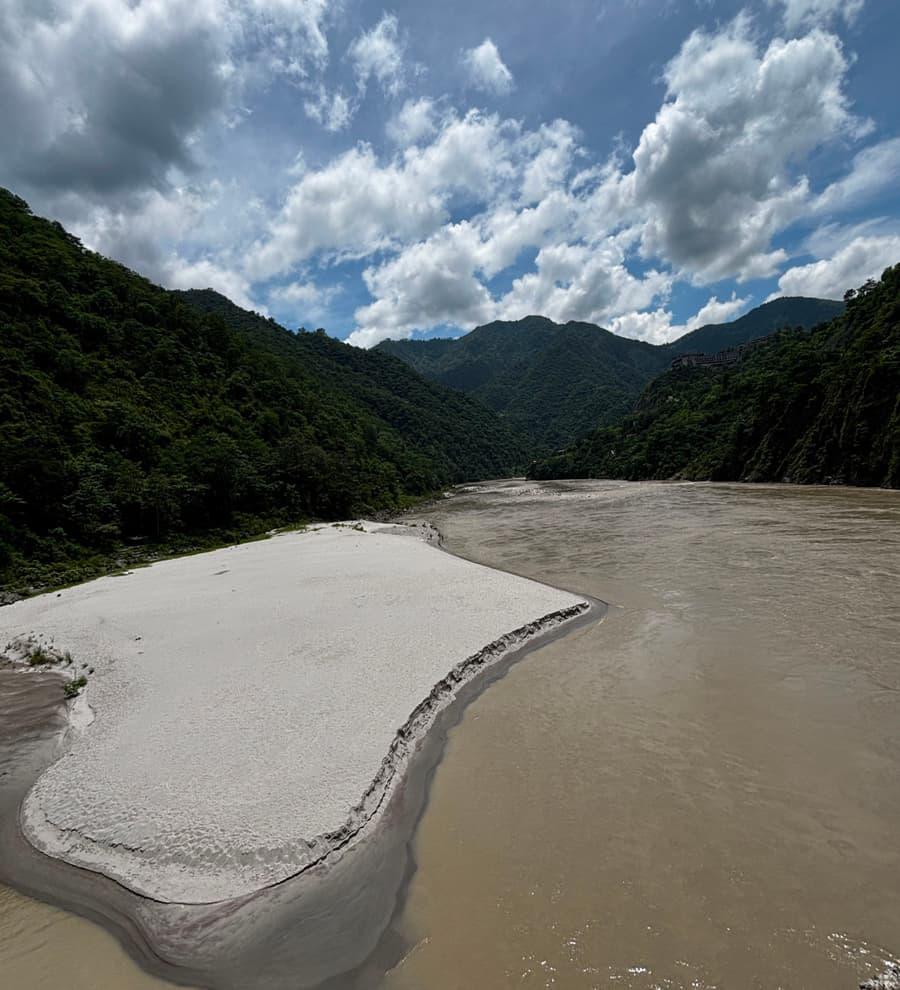
Kaudiyala beach is not the kind of place you plan a whole trip around, rather it's the kind of place that ends up being the best time of one. It's about 36 to 40 km upstream from Rishikesh, right where the village of Kaudiyala anchors the toughest stretch of Ganges rafting in the region, the one with the Great III and IV rapids, including the one named “The wall.”
On the beach, tents go directly on the sand. There is no town glow to fight with out here, so once the sun goes down the sky does something it doesn't really do in most places anymore, it fills all the way up with stars. Most camps run the basics well, bonfire, simple meals, a swimming spot in the calmer water near shores and organised chaos of a volleyball, cricket or someone's guitar, filling the hours between rafting and sleep.
What You Will Actually Eat
One thing to know before you sit down anywhere in Rishikesh is that the whole town is vegetarian and alcohol free. Sounds limiting on paper but in practice there is more than enough good food packed inside that boundary to make you forget the rule exists. Start with Chotiwala, running continuously since 1958 and marked by a statue out front of a man with a specific haircut. Their thali is the local benchmark that comes with dal, vegetable curry, rice and flatbread. Most importantly, get the kafuli; a spinach and fenugreek curry cooked in an iron Pan and the aloo ke gutke; potato's toasted with red chillies.
For breakfast, Aloo Puri (fluffy fried bread with spiced potato curry) shows up everywhere and almost never disappoints. Around Lakshman Jhula and Ram Jhula, the cafe scene goes fully international: Little Buddha Cafe serves momos, falafel and wood fired pizza and the German bakery has built its whole reputation on pastries, best eaten on a rooftop while the river handles the scenery for free. Right by the Tera Manzil, the Ganga View Cafe takes that idea a step further, its deck actually juts out over the water so you're eating pesto pasta or a slice of blueberry cheesecake more or less suspended over the current, with the temple visible over your shoulder. After the evening Aarti, follow the crowd to the chaat stalls. Aloo tikki piled with chickpeas and chutney is basically the unofficial closing dish of the day and one bite tells you exactly why nobody skips it.
Most people come to Rishikesh for the river, the yoga culture and the bridges that bounce a little too much for anyone's comfort, but you leave thinking about the chai you had on some rooftop, watching the water change color, already wondering when you can come back and actually sit still.