
On the cover: View of an evening in the Indian Mela by Shubhanshri01
When the sun sets, the dust rises, and the crowd gathers. They gather in numbers, with friends and family. The air is rich with incense, damp earth, and marigolds. Priests murmur mantras in the background while visitors bargain at the marketplace. Some indulge in local delicacies while others feel the thrill of the Ferris wheel. Welcome to an Indian mela, where festivity echoes through dust swirling under thousands of feet.
Celebrated Melas Across India
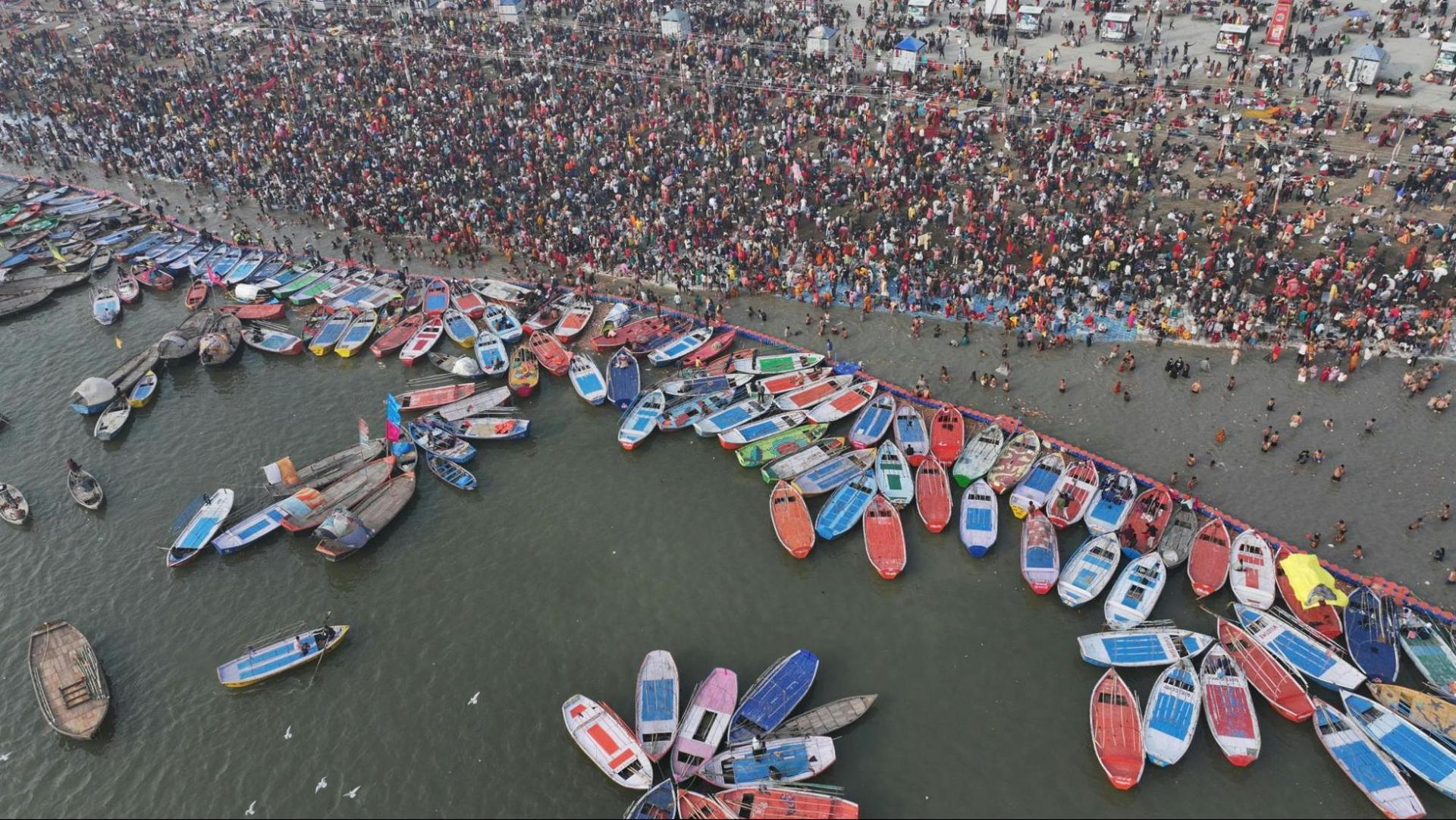
Kumbh Mela
A calm, glassy, and golden river flows by, reflecting the hue of the sun melting into the horizon. Devotional chants ripple gently through the air. Devotees gather in quiet faith, seeking solace and serenity through prayers. The environment at the Kumbh Mela is truly divine and blissful.
This Indian mela shows spirituality and faith, acting as a site of religious pilgrimage for the masses. The Kumbh is organised every twelve years along the coasts of the revered rivers of India when Jupiter completes one full orbit around the sun. This cosmological arrangement is considered auspicious for taking a holy dip in the sacred rivers to cleanse sins and aid liberation (moksha).
There are only four established locations where the Kumbha mela takes place on a rotational basis. These locations include Prayagraj, Ujjain, Haridwar, and Nashik because, according to a myth of Samudra Manthan (churning of the ocean), it was on these four locations that the drops of amrit (nectar of immortality) fell.
Ardh Kumbh is organised once every six years. To mark its significance and preserve its authenticity, UNESCO recognized it as an Intangible Cultural Heritage in 2017.
Pushkar Mela
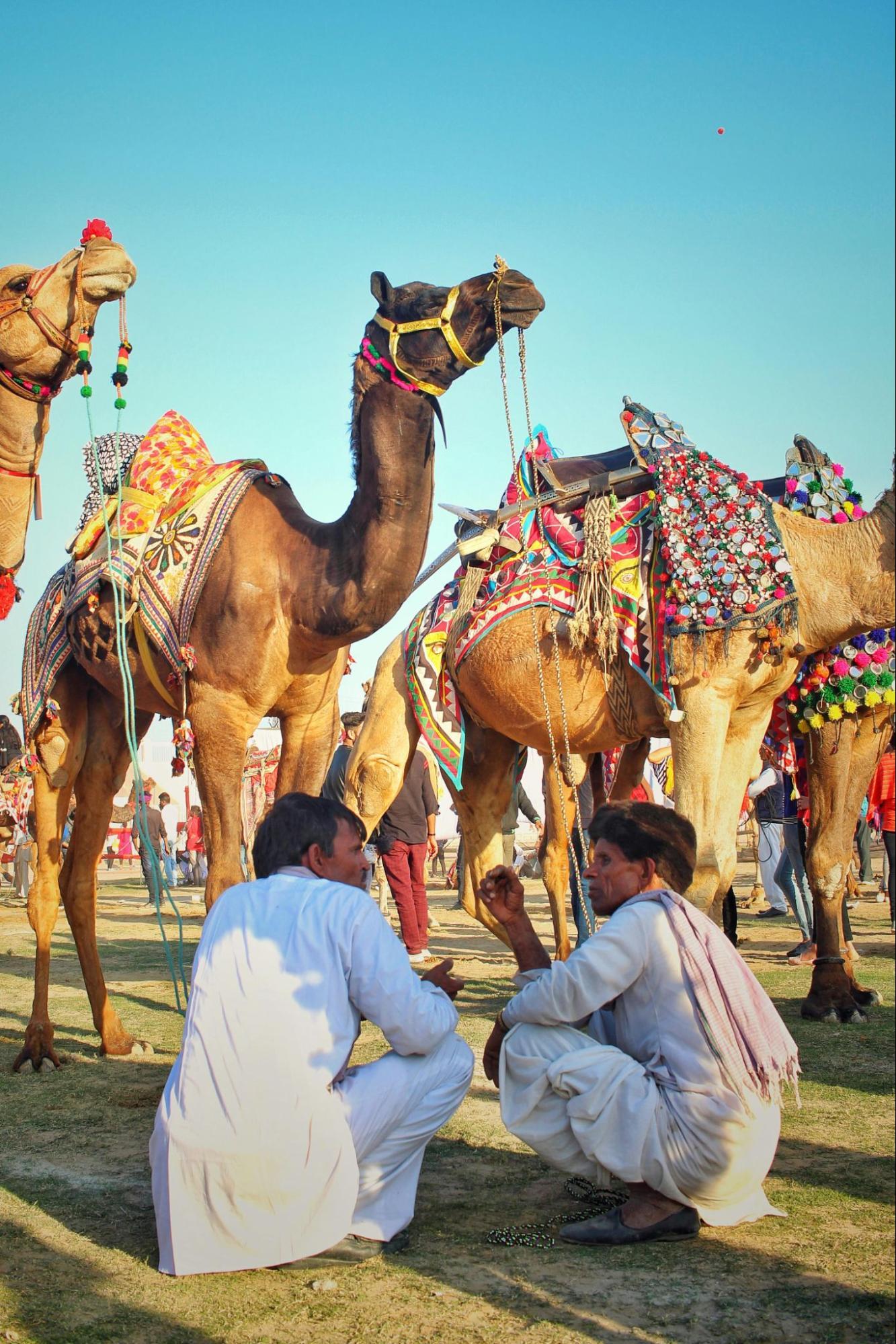
Often described as one of the world’s largest camel fairs, Pushkar mela is held annually during Kartik Purnima (October-November) in the desert town of Pushkar, Rajasthan. While one facet of the Pushkar mela is a major livestock trading event, the other revolves around the sacred Pushkar Lake, which is surrounded by white ghats and temples. Devotion to Lord Brahma, ongoing trade of decorated camels, animal competitions and parades, folk music, and Kalbeliya dance performances collectively picturize the Pushkar fair in India. Here, commerce, faith, and festivity combine to showcase the richness and diversity of an Indian mela.
Ambubachi Mela
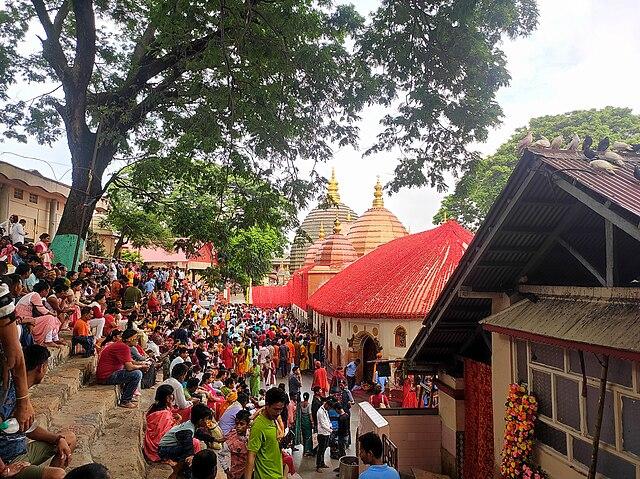
Amidst the established taboos surrounding menstruation worldwide, this Indian mela honors the annual menstruation cycle of Goddess Kamakhya, one of the divine mothers. Celebrated during the monsoon season at the revered Kamakhya temple in Guwahati, Assam, the fair is marked by shakti worship and fertility tradition. On one hand, the mela is characterized by the special practice of venerating the feminine power. On the other hand, it offers a ground for a vibrant cultural gathering that boosts the local economy through trade and tourism.
Surajkund Mela
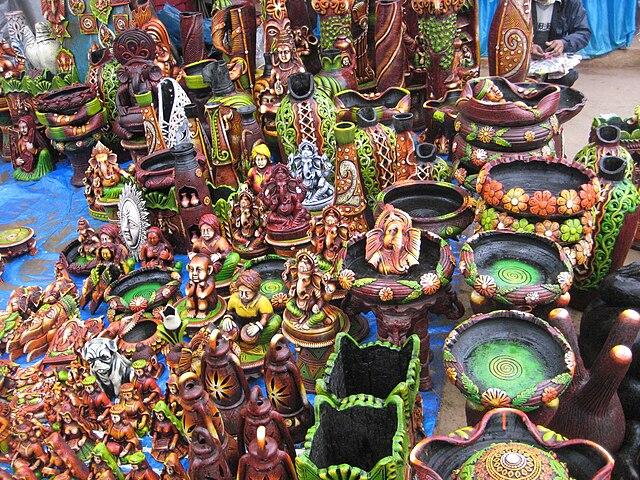
To the Indians, mela is synonymous with artistry, handicrafts, amusement, and joy. Surajkund International Crafts Mela, at Surajkund reservoir, Faridabad, Haryana, is the best example of that. One of the distinctive features of this mela is the ‘Theme State’ concept, where every year, one Indian state is highlighted through its cultural performances, arts, architectural replicas, and food stalls. So, to explore the widespread celebration of traditional craftsmanship, artisanship, and folk culture, Surajkund mela is where you need to be.
Hemis Festival
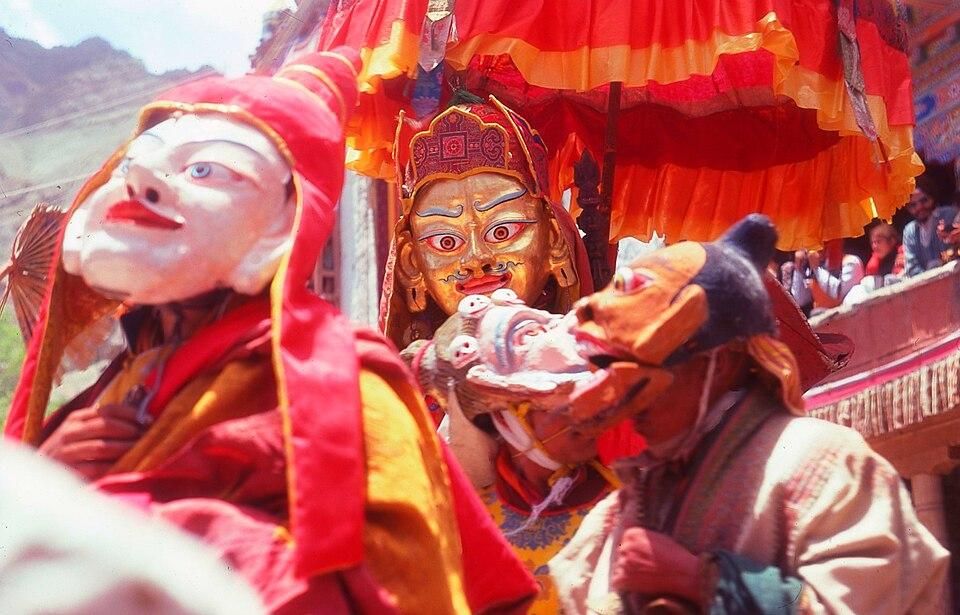
This festival is an expression of Buddhist gratitude towards Guru Padmasambhava, who is regarded as the protector and promoter of Buddhist philosophy across the Himalayas. It is organised annually in the month of June or July at the Hemis Monastery in Ladakh.
At the centre of the Hemis lie the monks, who perform the Cham dance, organise prayers, and perform rituals to invoke peace, prosperity, and protection. In the silence of the hills, the festival brings liveliness and brightness in the form of elaborate costumes worn by Cham dancers, deep chants of the monks, and the celebrated tradition of the ages.
Viewing the many faces of Indian melas, you must be enchanted and curious to explore each one of them. Each mela brings its own character, purpose, and way to celebrate. They remind us to embrace life’s cycles in joyful tradition and to enjoy the present moment. Because once the tents come down, the lights are dimmed, the stalls are shut, and the music stops, only the dust will remain, carrying the memories, holding prayers, storing profits, and echoing the joy while waiting for the next gathering to rise again. In this way, the Indian melas travel a full circle, from festivities at dusk to dissertation at dawn.