
On the cover: The Last road of India by Kondephy

Dhanushkodi lies at the southeastern tip of India, where a narrow strip of land extends into the sea. Here, you’ll find geographical wonders, references to the Ramayana, and the ruins of an abandoned town.
Train Over the Ocean
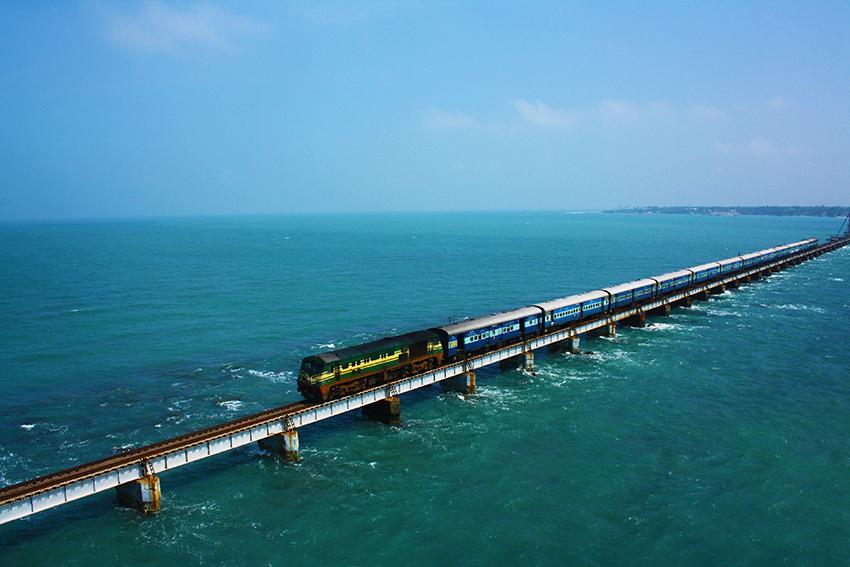
Journey to Dhanushkodi begins by crossing the iconic Pamban Bridge. It runs low over the sea, and the train moves slowly across the bridge, where it feels as though you are gliding gently over the blue sea.
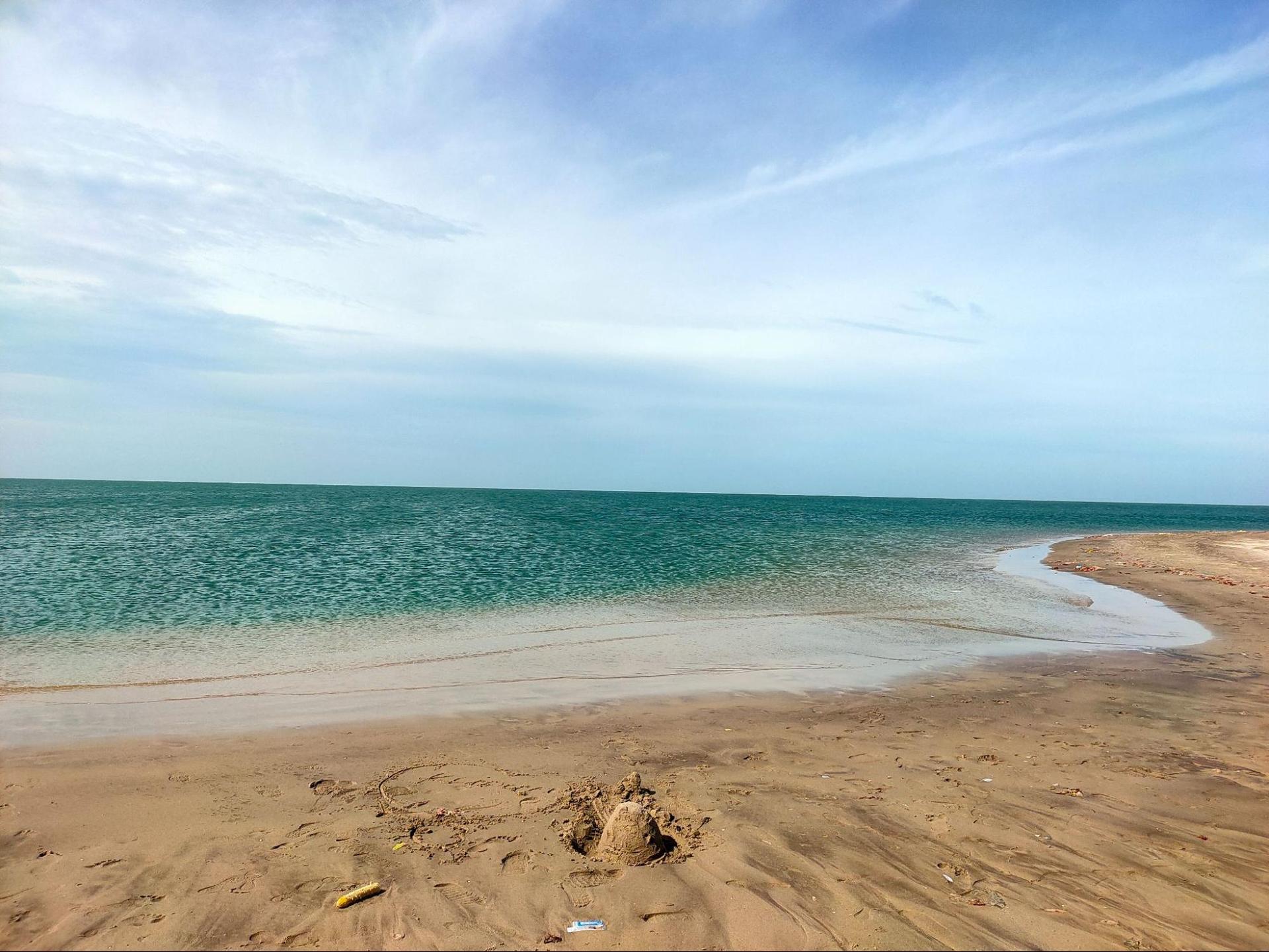
As you arrive at Rameshwaram, the route continues by road. The landscape gradually opens to beautiful beaches where you can unwind and swim in clear turquoise waters. The coastal breeze and rhythms of waves relax the mind. The roadside restaurants serve authentic South Indian dishes. Fresh coconuts are sold on the way, cut and served on the spot.
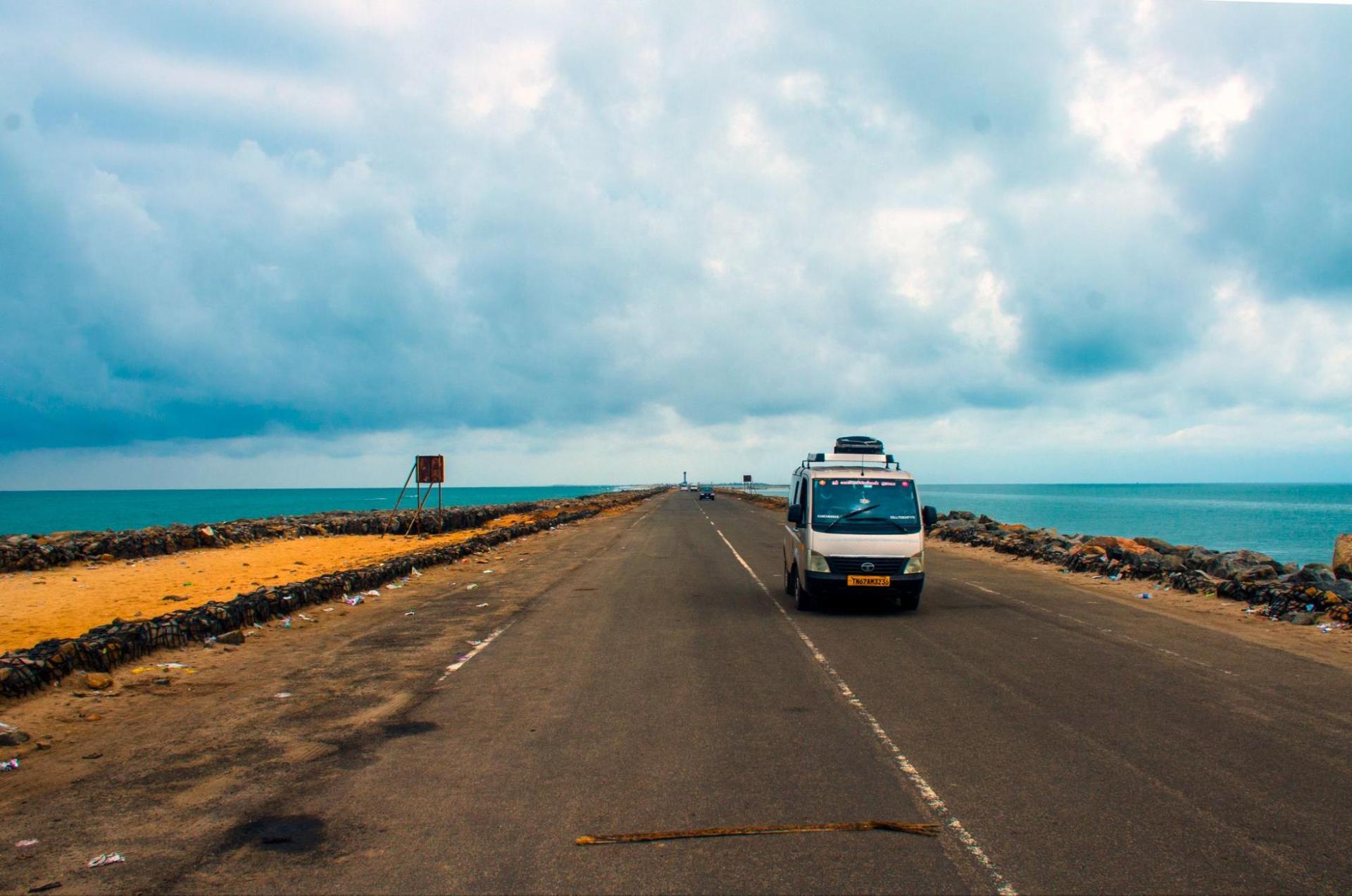
The Last Road of India - NH 87
National Highway 87 leads towards the end of the country. Here the Indian Ocean and the Bay of Bengal merge seamlessly. The road runs between these two bodies of water. The horizon softens, and the blue waters appear to meet the sky, creating a panoramic frame of infinity which almost feels unreal.
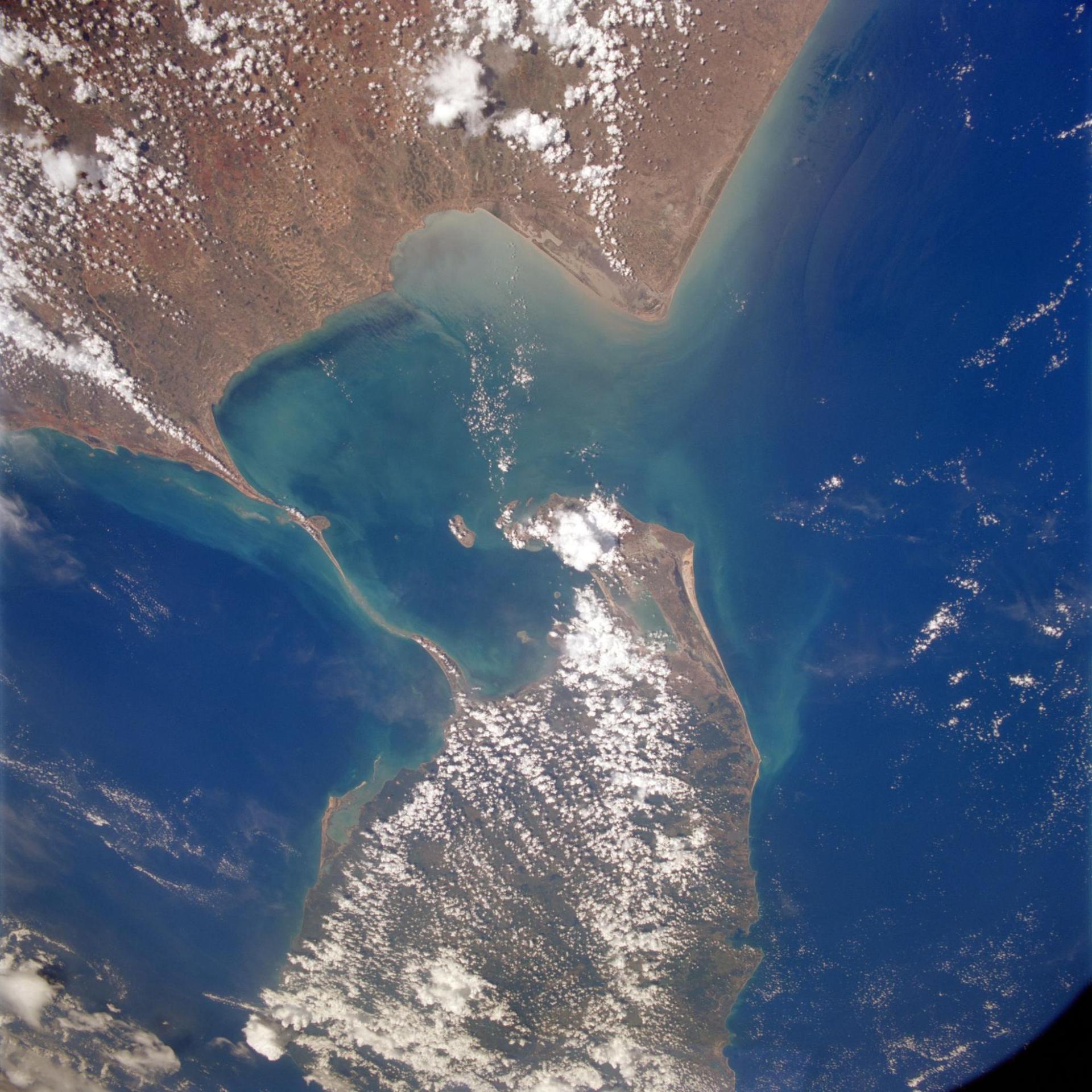
This notable edge is believed to mark the beginning of the legendary Ram Setu (bridge), from the Ramayana. According to the epic, Lord Rama, with the help of his devoted sena (army), built a bridge across the sea to reach Lanka (Sri Lanka) and rescue Maa Sita from Ravana. The stones used to build this bridge floated on water, each carrying the name “Jai Shri Ram” giving it the power to float. Even today, traces of Ram Setu can be seen as a chain of shoals between Rameswaram and Sri Lanka.
Some studies describe it as a natural formation created by sandbanks and coral deposits shaped by ocean currents, but other interpretations connect it to the account described in the Ramayana.
Kothandaramaswamy Temple
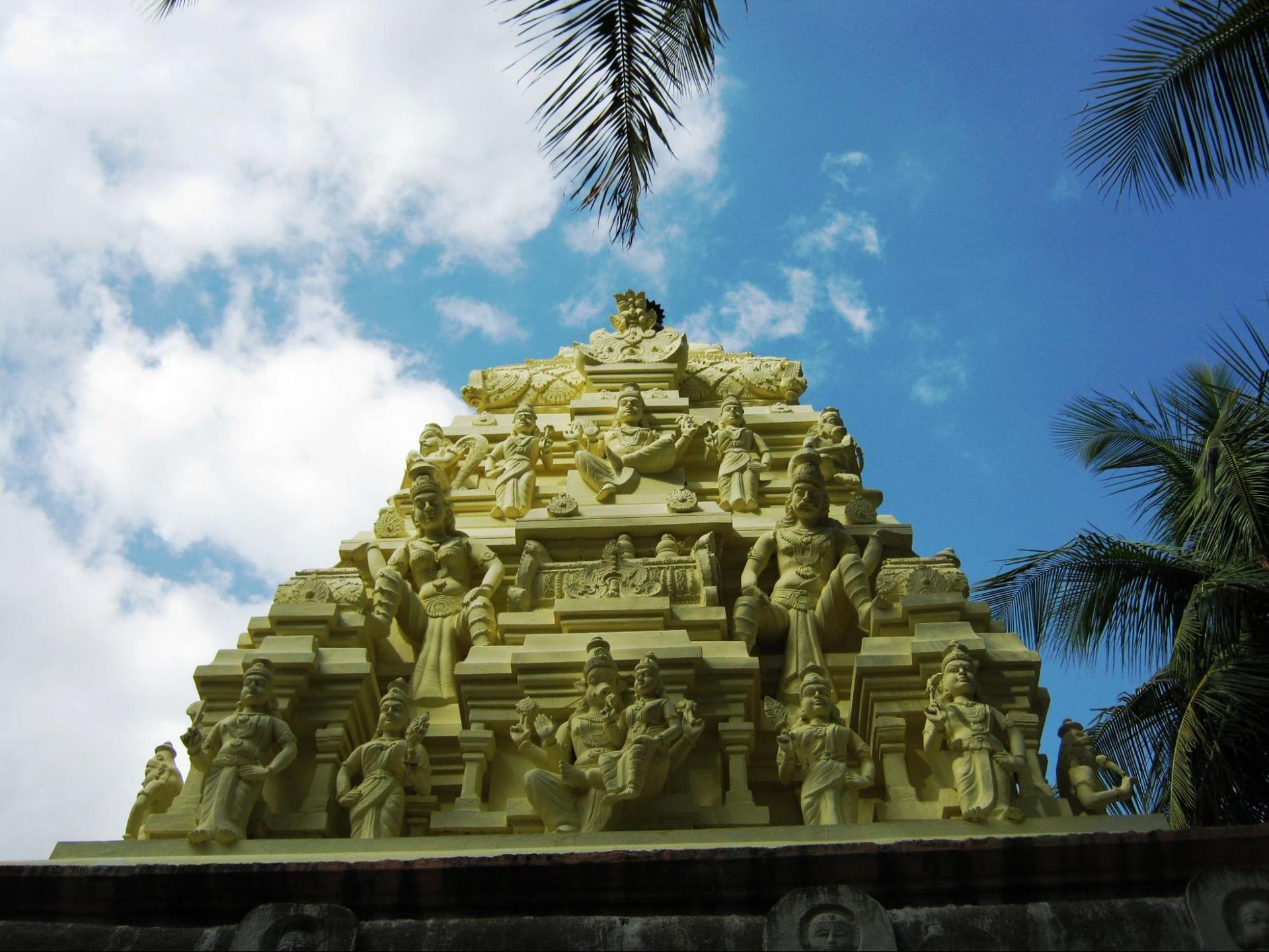
Kothandaramaswamy temple, also known as the Vibhishana temple, is located at the shore of Bay of Bengal with open land surrounding it. The temple is filled with beautiful carvings inside. The soothing sound of waves and gentle sea winds stays ever-present.
This site is also associated with Ramayana. Vibhishana, the brother of Ravana, advised him to return Sita and avoid further conflict. Ravana rejected his counsel and asked him to leave the court. So, Vibhishana left Lanka during the war and approached Rama’s camp seeking refuge. Despite opposition from some members of the army, Rama accepts him without condition. After winning the war in Lanka, Rama crowned Vibhishana as the king of Lanka right from this region where the temple is situated today. The temple itself was built later as a symbol of forgiveness and righteousness. Its religious importance attracts pilgrims and travelers from around the world.
The Ghost Town
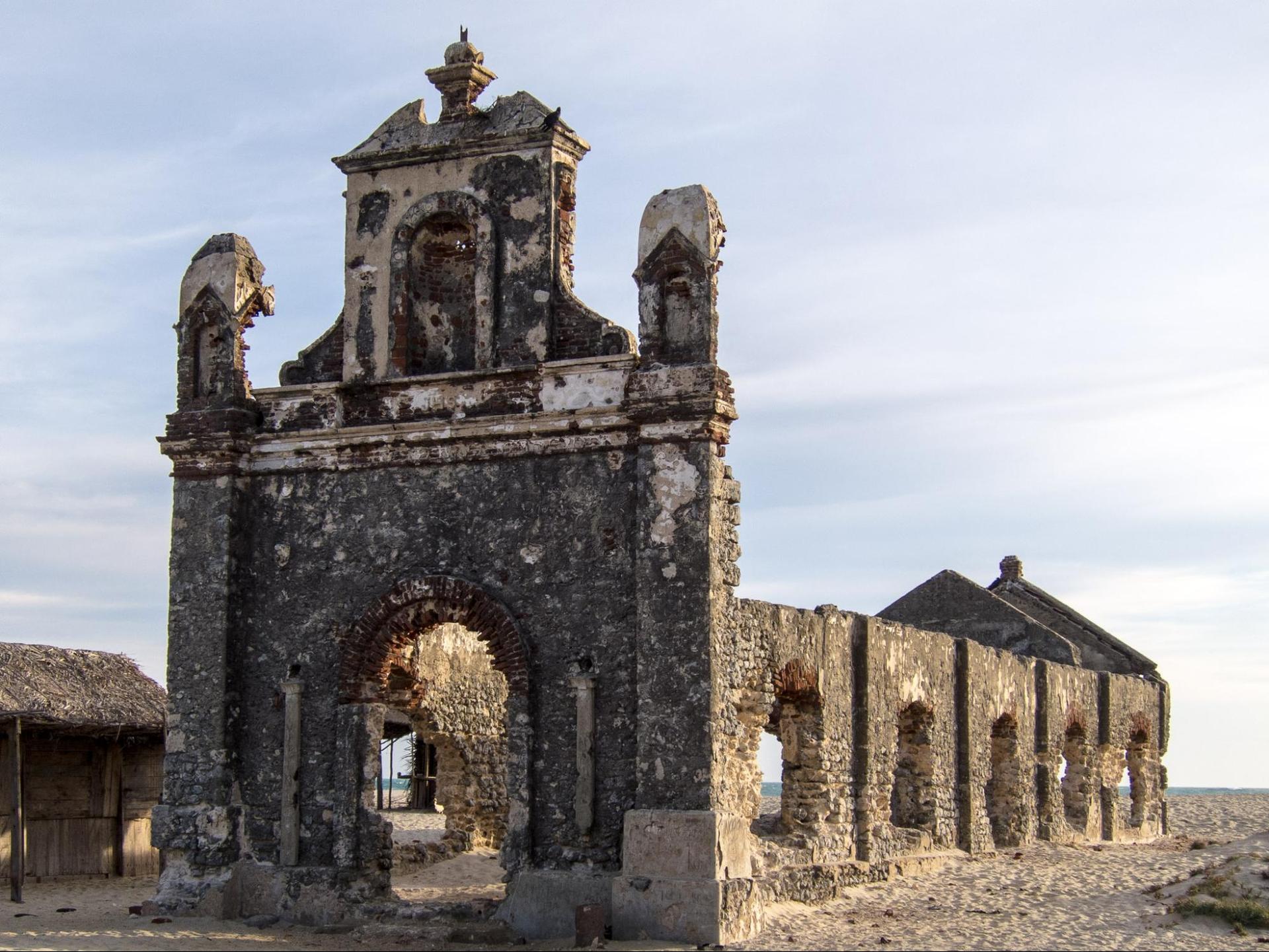
In December 1964, a powerful cyclone struck Dhanushkodi. The storm brought high tidal waves and strong winds, causing heavy destruction. A passenger train traveling toward the town was caught near the coast during the cyclone and was swept off the tracks. Dhanushkodi stands as an abandoned town today. The remains of houses, a railway station, a church, and scattered structures are visible across the area.
Between the sea, the ghost town, and the legends of Ramayana, Dhanushkodi is a place where history, belief, and landscape remain closely tied. A road that takes you to the edge of India, the spectacle of watching an ocean and sea merge as one, cuisine that is unforgettable and adding to mystery, an abandoned town, all come together to create an experience that is unmatched. When you leave Dhanushkodi, you're accompanied with countless memories, pictures, stories and a lingering sense of wonder.