
The first thing you notice is the tower’s upright presence against the sky. Rising to about 73 meters, the minaret narrows in five stepped levels, each edged with a balcony. Here, a visitor sees both careful craft and a public purpose in one single form.
Raised to Mark Victory
The Qutub Minar was built shortly after the Ghurid conquest of North India. In 1192, the Central Asian ruler Muhammad of Ghor defeated the Rajput king Prithviraj Chauhan at the Second Battle of Tarain. This victory opened the path for Islamic rule in northern India and the builders working under Qutb-ud-din raised the minaret to mark that victory. The tower stood beside the mosque as a clear sign of the new rule. Built in an Islamic style, its upper rings allowed the adhan (the call to prayer) to carry across open spaces. In this way, the structure tied ritual purpose to the daily life of the city.
Stone That Carries Many Centuries
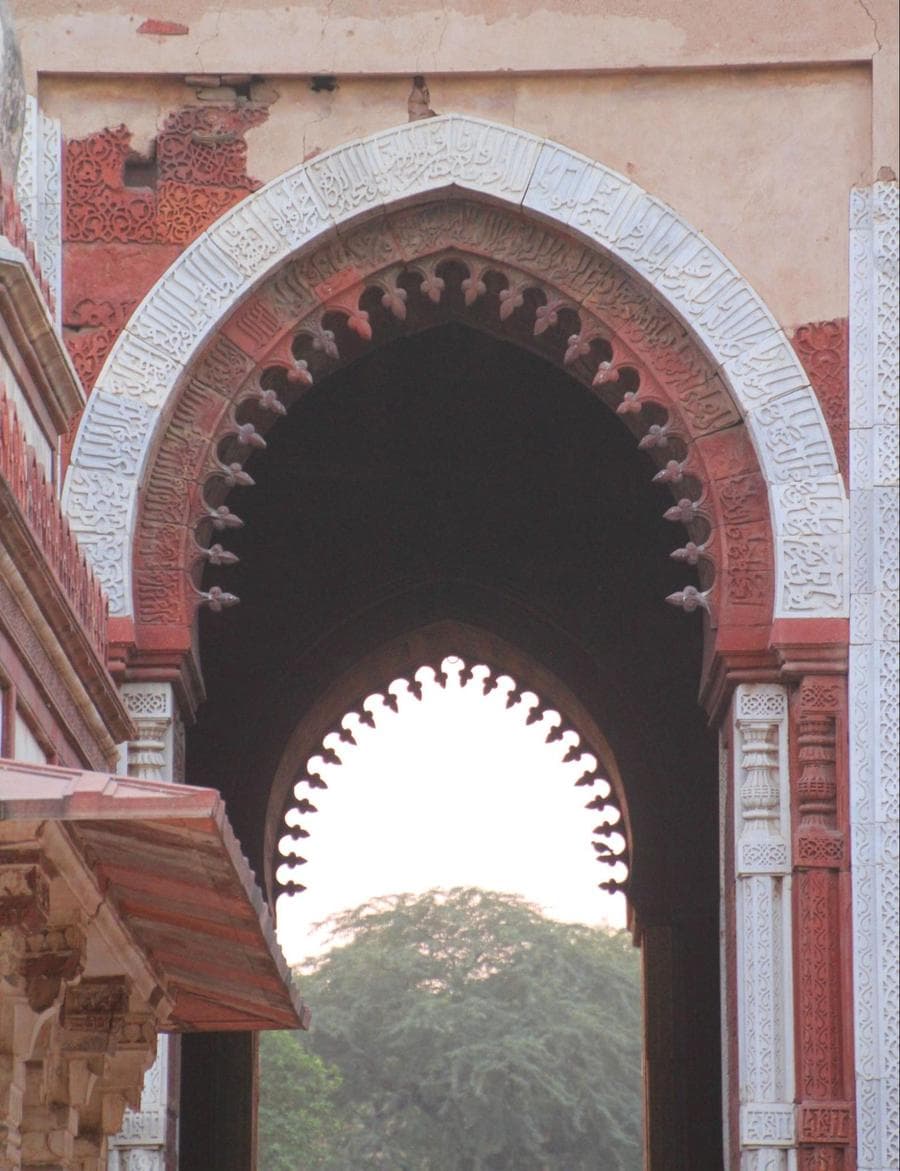
Red sandstone forms the tower’s main body, while pale marble appears in later bands where new layers were added. Carved inscriptions sit beside floral and geometric panels naming patrons and marking dates. Look closely, and you find patches where masons replaced worn blocks and sections where different hands finished the carving. Those visible joins read like a timeline along the shaft, showing how artisans from several eras kept the structure standing. The minaret becomes a record of evolving skill and care, visible in every layer of stone.
Testament of Time
Qutub Minar is a UNESCO World Heritage Site because it blends careful stonework with a long civic history. Visitors come to admire the carving and also to read how a public building worked in city life. Over centuries, it has marked authority. Today, it remains a living object of the past you can still walk around and examine.
What to Notice
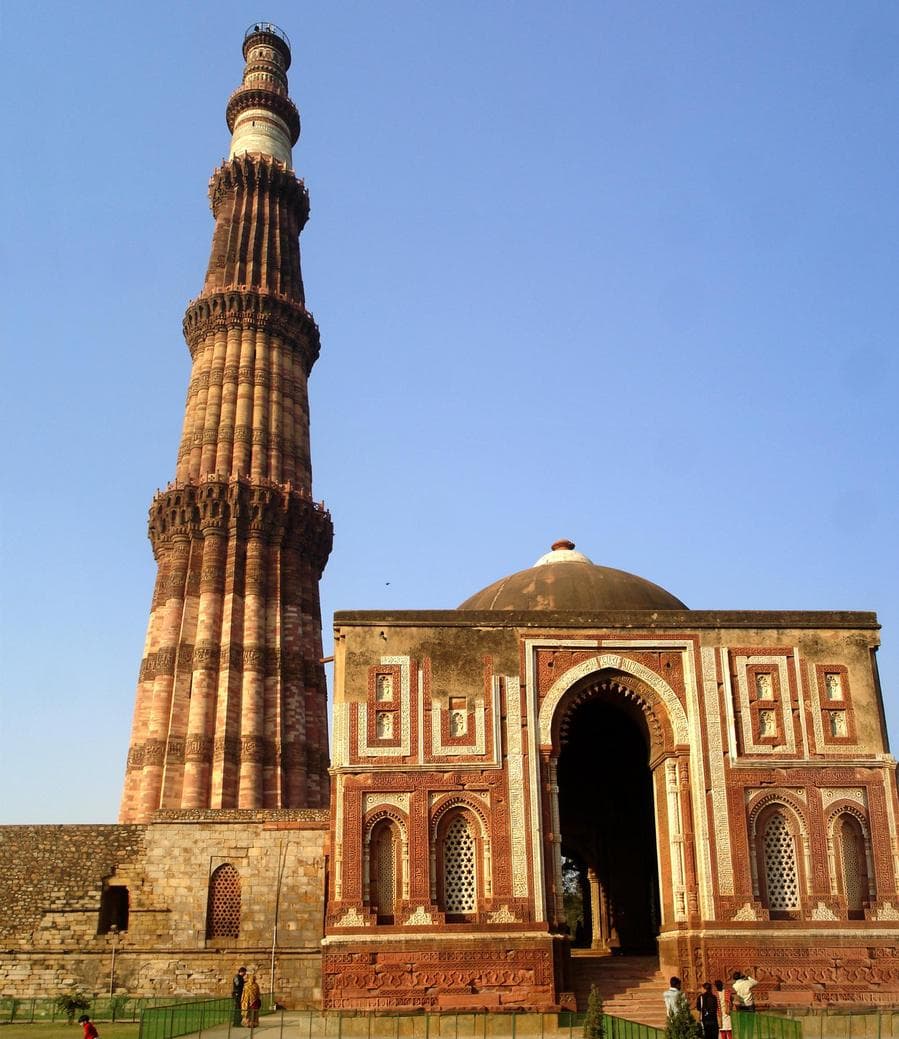
Stand close to read the Arabic script carved into the bands. See where sandstone meets marble and how the shift in material marks later work and dates. Walk the surrounding ruins to find where the mosque courtyard once sat at the tower’s base. Look also at the nearby Iron Pillar and observe how different materials weather under the same sky.
Visiting
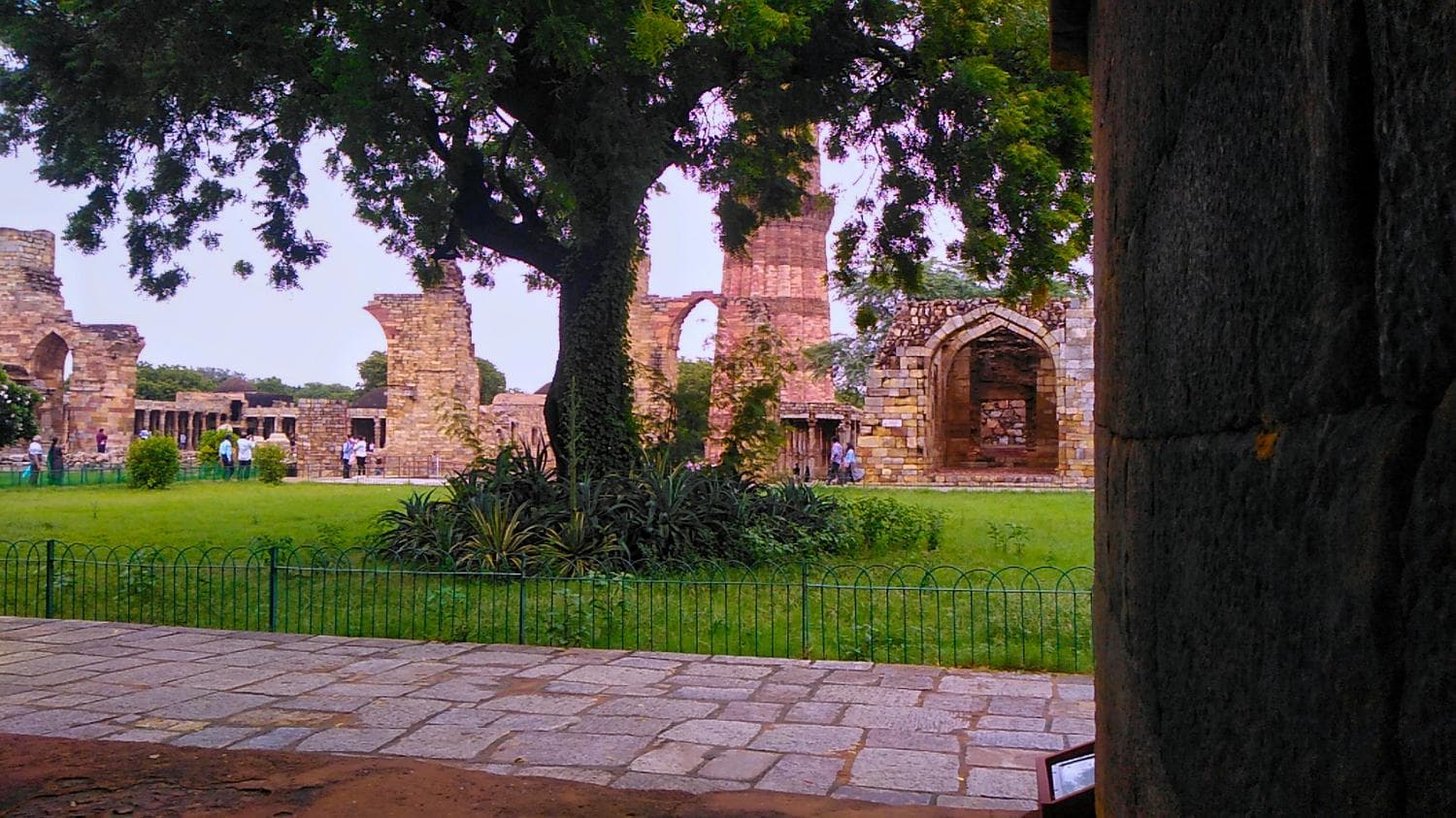
The site lies within a larger park and is reachable by short drives from central Delhi. Arriving early helps to avoid crowds and to catch softer morning light on the carvings. Respect signs that protect fragile surfaces and follow staff directions for routes through the monuments. An audio guide or short local tours helps connect dates to visible features without overloading the walk.