
Just before you enter the wide gate, the courtyard spreads out ahead. Tall arches and twin towers surround the space. Red sandstone walls meet pale marble floors. Light shifts across the stone and marble as the day moves forward. From the first steps inside, it becomes clear how architecture, worship, and daily movement belong to the same space.
Built for a Capital
Shah Jahan built the mosque in the mid-1600s as the central prayer site for his new capital, Shahjahanabad. Artisans carved red sandstone and white marble to form a large prayer hall and an open courtyard used for the city's gatherings. The structure still operates under the same arrangement of space and purpose.
How the Design Moves You
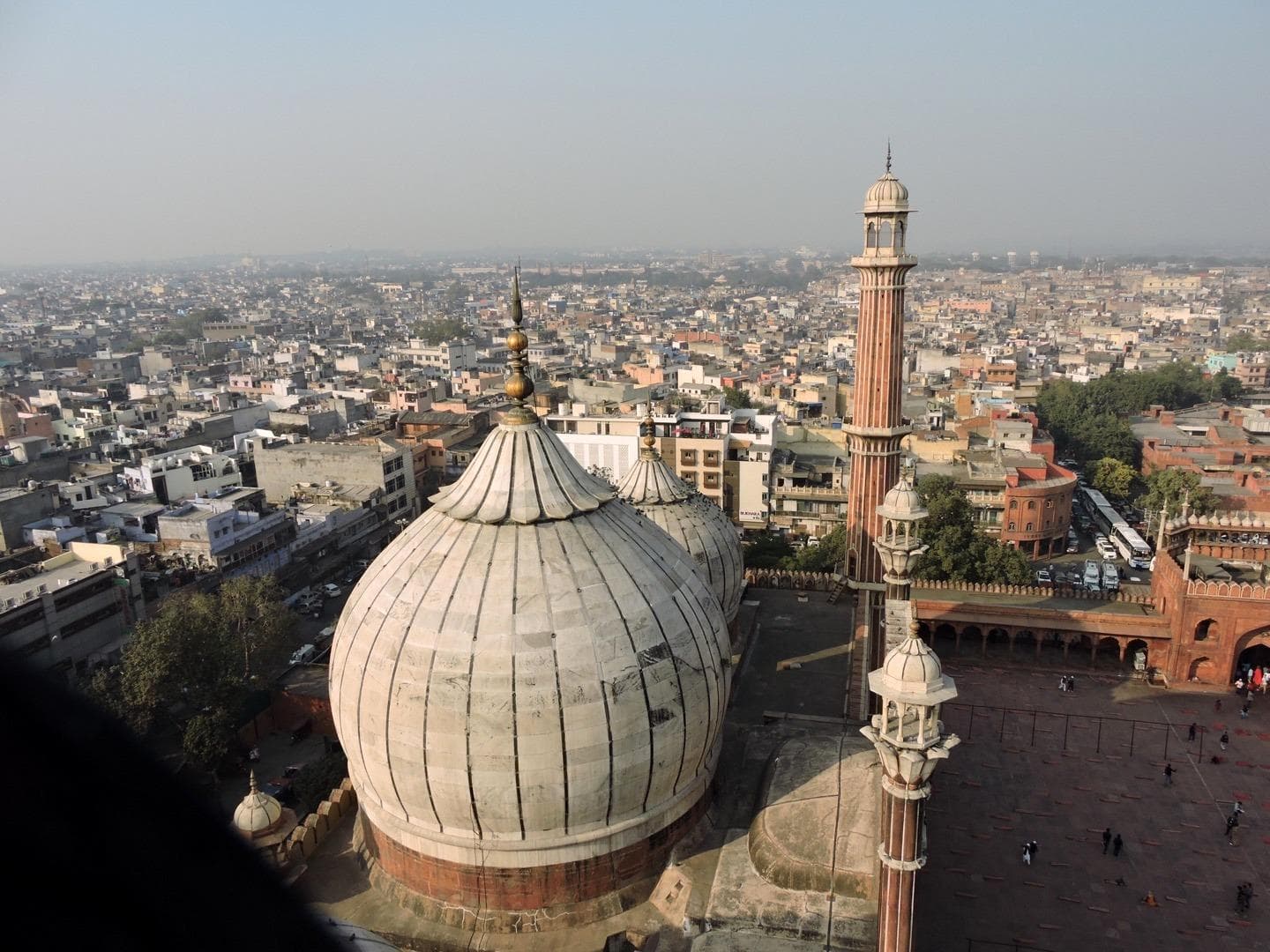
Wide steps lead into a rectangular area of tile and arcades that invite rest and watching. Three domes rise over the main hall while two minarets mark the corners. Shallow water channels and a central fountain help with washing before namaz and cool the air on hot afternoons.
The Courtyard at Prayer Time
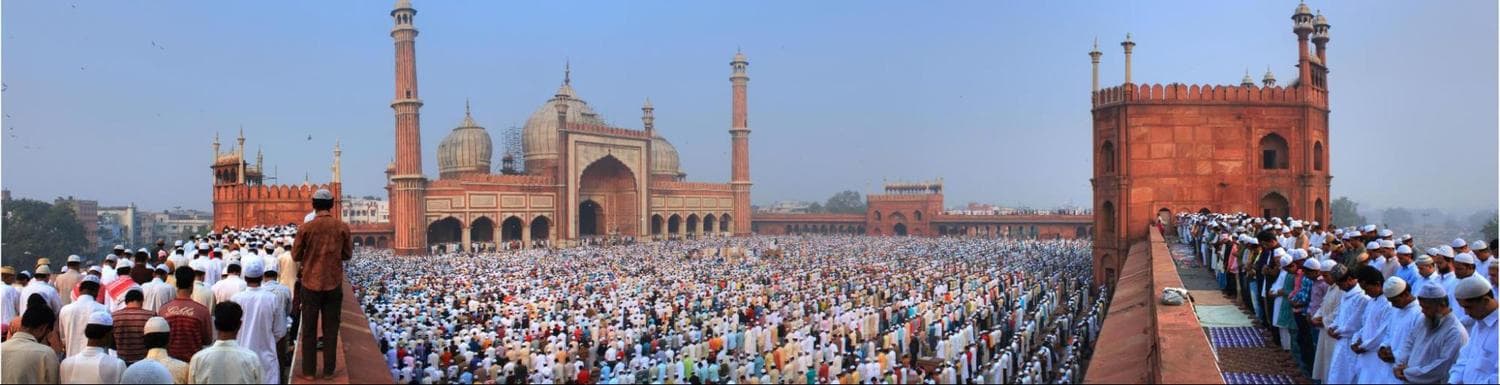
On busy days, the court holds thousands who arrange themselves in neat lines. Men and women occupy separate sections, all facing the same direction inside the hall. When the call to prayer sounds, the entire courtyard aligns toward one point.
Voices That Mark the Day
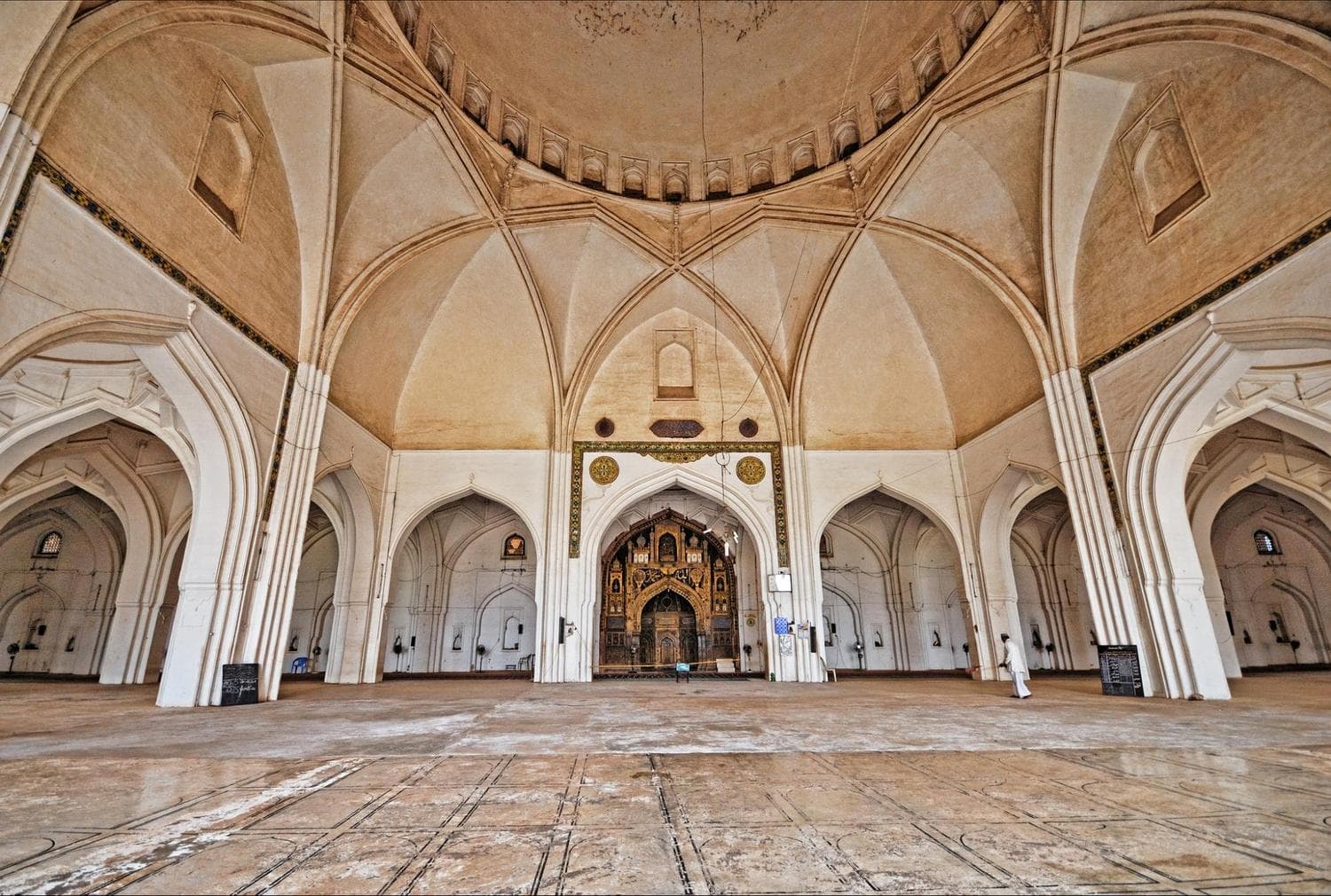
Inside, you hear spoken verses and communal chanting at set times of the day. These sounds are not performance. They are the work of worship and the way people mark hours. If you sit for a while, you notice how voices echo across the stone and how people continue to arrive and leave between prayer times. The space stays occupied from morning until night.
Food, Charity, and Community Life
Nearby kitchens and charitable food distributions are part of the mosque's role. During festivals and Fridays, meals are prepared in large quantities for those who come to pray. Volunteers arrive early to organize the distribution. After services end, people line up along the courtyard walls. Food is served on plates for eating there or wrapped and taken home.
Visiting with Respect
Cover shoulders and knees before entering. Women should wear a scarf inside the prayer hall. Leave shoes at the courtyard entrance where rows are marked out. You can photograph most areas, but avoid pointing the camera at people during prayer. Visiting in the morning before ten or the late afternoon after four will have fewer crowds.