
Heaven, a place where nature is at its peak, lush mountains stretch far away, meadows are filled with flowers, and greenery spread as far as the eye can see. A sight so extraordinary that it shouldn't belong on earth. But what if I told you this is no fairy tale? It exists in real life, and you, yes, you, can walk over there right now. This place is known as the Valley of Flowers.
History: The Beginning of a Legacy
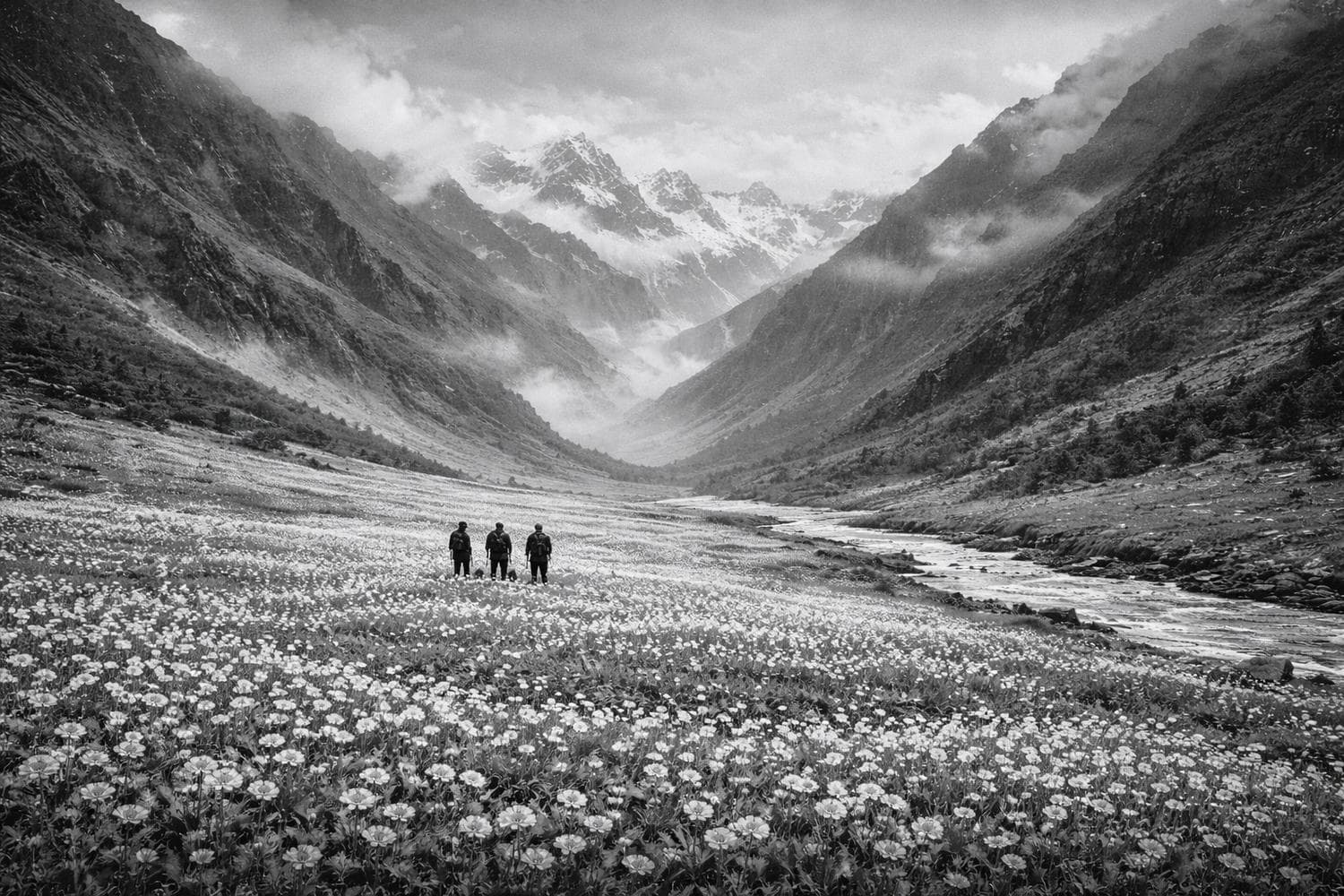
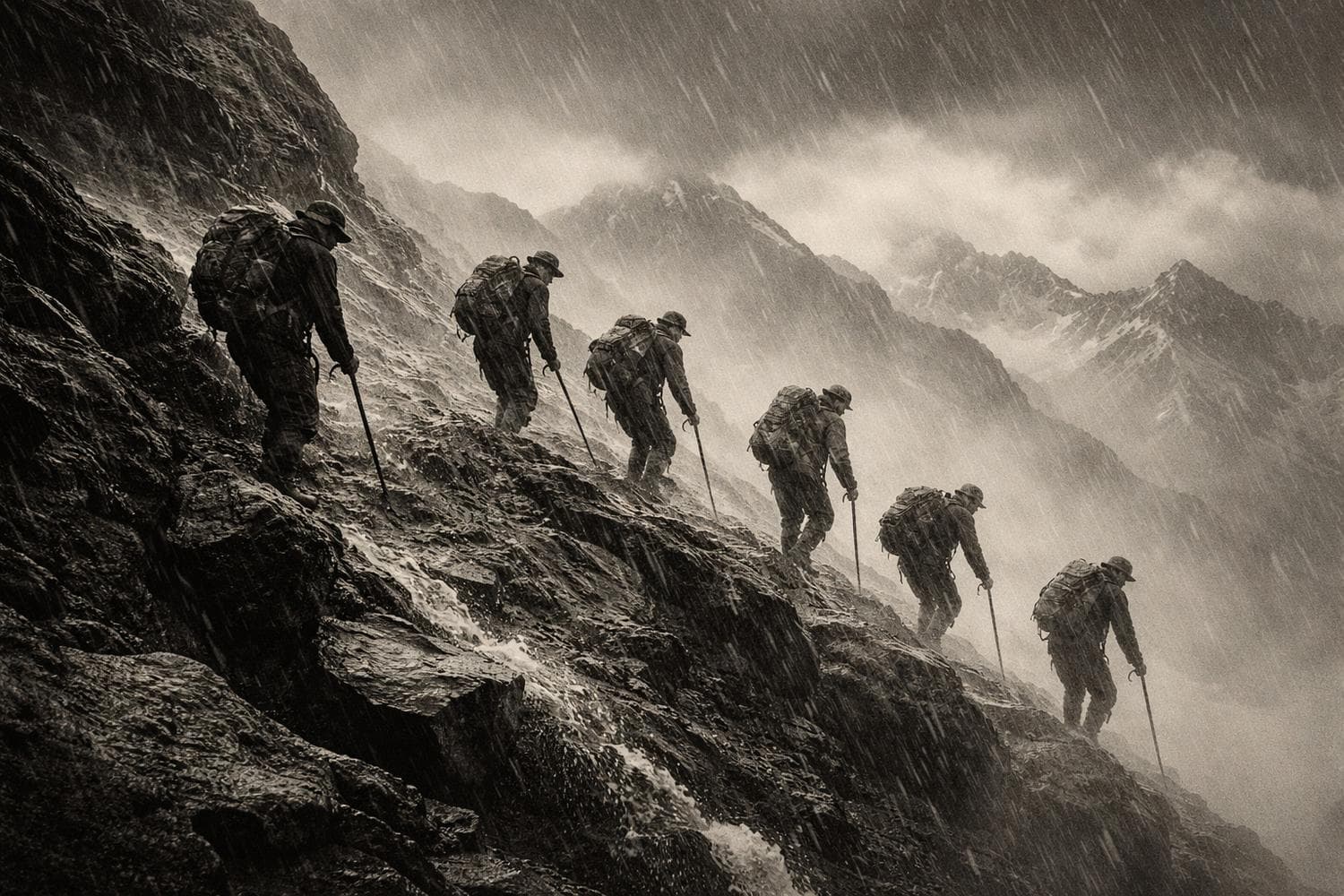
The records show that in 1931, a small group of six British mountaineers began their trek on the foothills of the Himalayas, intending to explore the untapped regions surrounding them. But not long after, they were met with a sudden downpour, forcing them to scatter apart and find shelter quickly before getting chilled to the bone.
When the rain stopped and the winds started settling down, dense mist surrounded Frank S. Smythe and his two partners: R. L. Holdsworth, a botanist, and Eric Shipton, a well-known explorer of the Himalayan region. They were all completely lost. Then suddenly, Holdsworth shouts, "Look!” as the other two run behind him. At first, all they could see was wet and slippery rocks; then, eventually, they saw a splash of blue at the edge, and beyond that was a plain of blue primulas, or primroses.
R. L. Holdsworth writes, "All of a sudden I realised that I was simply surrounded by primulas. At once, the day seemed to brighten perceptibly. Forgotten were all pains and cold and lost porters. And what a primula it was!”[1]
They saw a large patch of wild flowers, supposedly primroses of many colors, showered with fresh rain and sprinkled with sunshine escaping through the foggy mess. Smythe further describes:
“In all my mountain wanderings, I had not seen a more beautiful flower than this primula; the fine raindrops clung to its soft petals like galaxies of seed-pearls and frosted its leaves with silver.” [2]
The next day, they descended the valley to the lush meadows, which later became known as the “Valley of Flowers.” They finally camped where no one can now, surrounded by flowers like anemones, marigolds, globe flowers, delphiniums, and more.
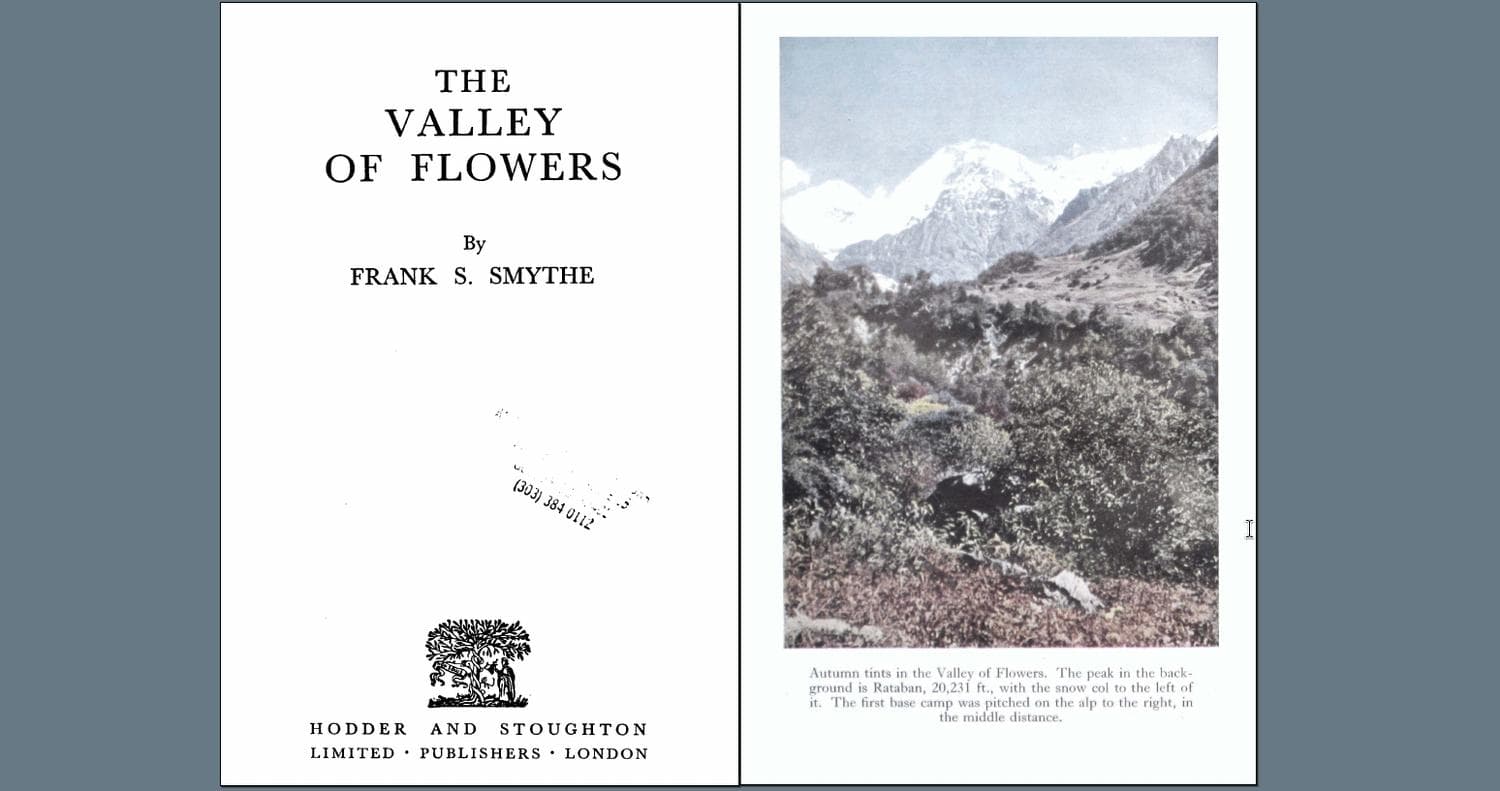
The story doesn't end there. Frank S. Smythe was so touched by the view that when he returned to his home in London, he became a gardener. Seven years later, he published his book, “The Valley of Flowers.” So fitting was the name that it was eventually adopted formally for this breathtaking place we all know and love.
Many other mountaineers came soon after and started exploring the other regions inside the Nanda Devi Biosphere Reserve. It was officially recognized in 1982 and finally inscribed as a UNESCO World Heritage Site with two core zones: Nanda Devi National Park in 1988 and Valley of Flowers National Park in 2000.
Highlights of this Breathtaking Journey
This 18-kilometer-long trek is filled with countless adventures. This section will explore each one, starting with:
Gobind Ghat: The Start of the Journey (18 km away from the valley)
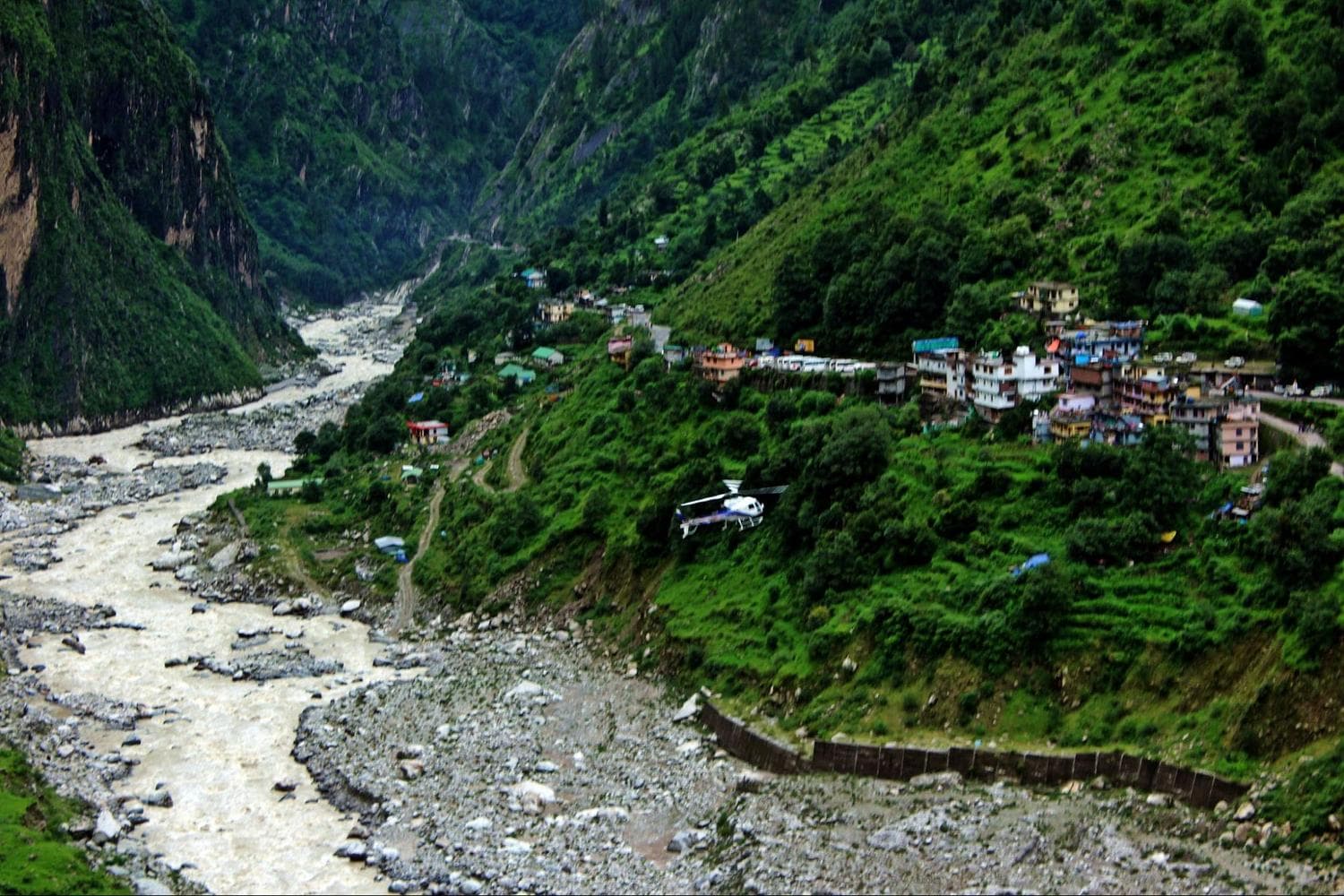
This iconic city may be small, but it acts as the starting point for two big treks: Valley of Flowers National Park, which is about 17–18 km long, and the Gurudwara of Shri Hemkund Sahib Sikh, which is 20 km away from Govind Ghat. Both attractions follow the same route. And that's why people often see foreigners mixed in with pilgrims, sharing their stories along the way.
There is also an alternative route by helicopter. It can be accessed at Gauchar, which is just 100 km, or a 2-hour drive, away from the southwest of Govind Ghat. It'll get you directly to Ghangaria in under half an hour.
Apart from that, Govind Ghat acts as the resupply zone for all your essentials like food, medicines, mountain gear, etc. Once fully stocked, tourists can choose to start their trek from here on foot or take a taxi to:
Pulna Village: The Last Pit Stop (14 km Away)
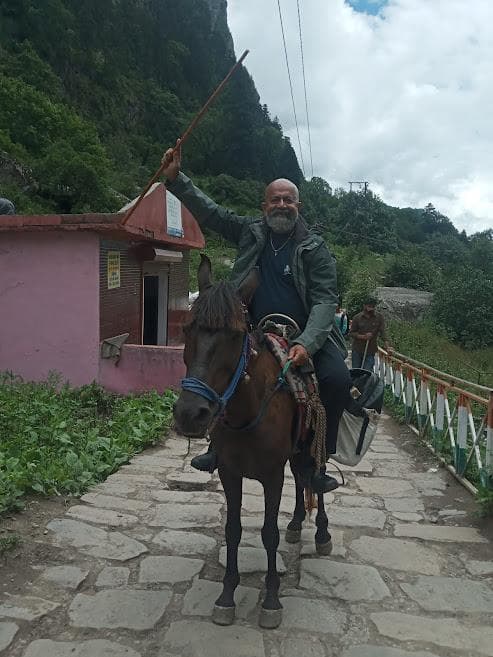
This small settlement acts as the final supply point before the challenging part of this trek begins. From here, tourists can choose to embark on foot, which is the most recommended way. Or they can hire porters and ponies or mule rides if needed.
And if you are worried about running out of food, don't be. There are dozens of dhabas, roadside eateries, that serve breakfast and lunch, and have water refill stations along the way.
The trek goes on for about 9 km before the main resting zone. Which is also known as:
Ghangaria: The Last Human Settlement (Less than 3 km Away)
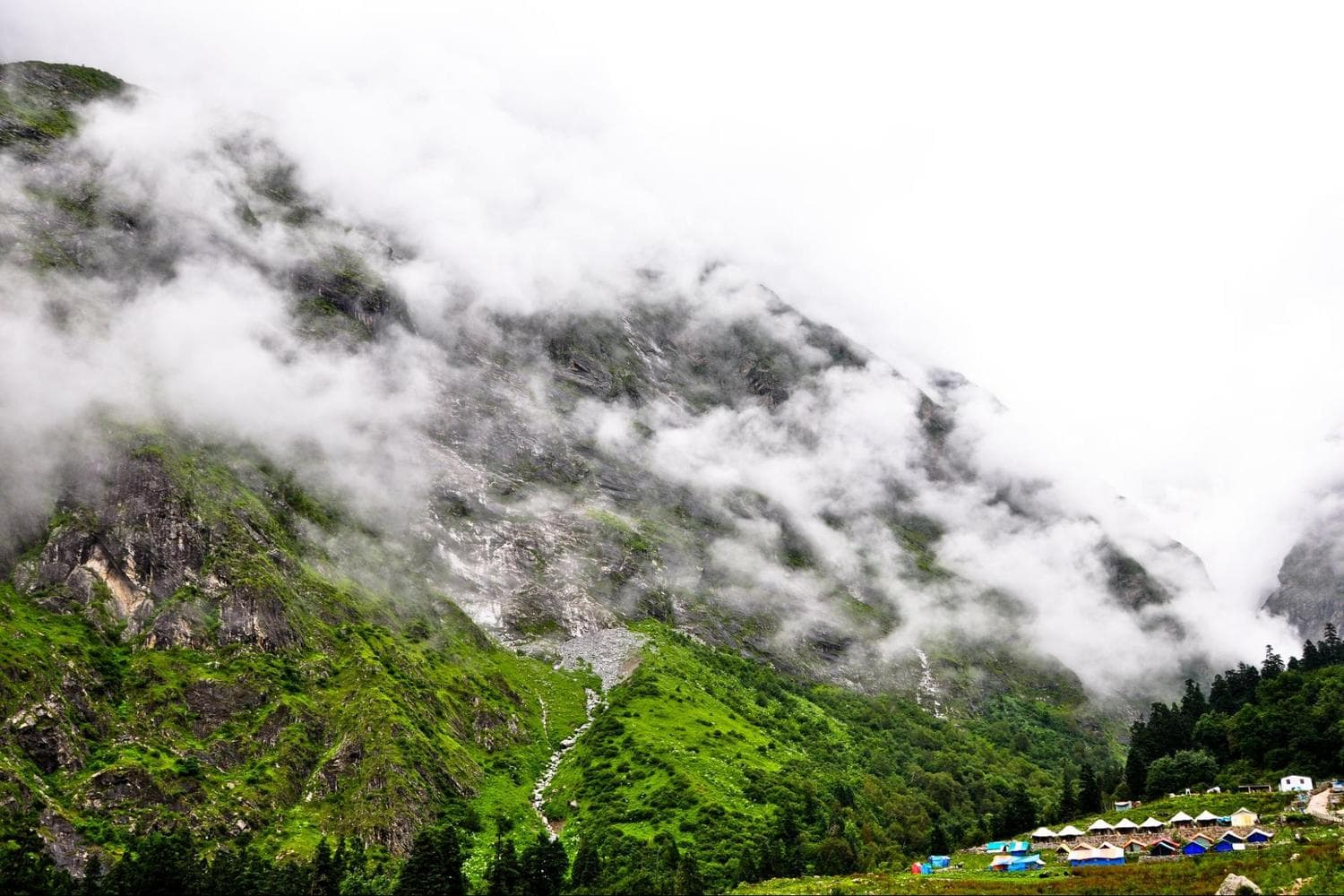
Also known as Govind Dham, it is the last human habitation you'll see before the main attraction. Tourists are allowed to camp here, and some fortunate ones get invited to stay with villagers and have a firsthand look at how the local specialties are made.
Foods and delicacies are what make this place special. But nothing beats the wholesome shoemakers outside the Gurudwara Sahib Sri Govind Dham. Who diligently fix the broken footwear of tourists and pilgrims alike. No cheating, no overpriced garbage, only beautiful craftsmanship.
And before the final stretch, head over to the Forest Department Checkpost and get your 3-day pass. This pass allows you to only visit the valley and return by 5 PM. Camping isn't allowed beyond Ghangaria.
Now the path cuts into two big choices: Head over to the Valley of Flowers through the breathtaking views of the Zanskar Range, or take a detour to:
Valley of Flowers: The Eden of Uttarakhand
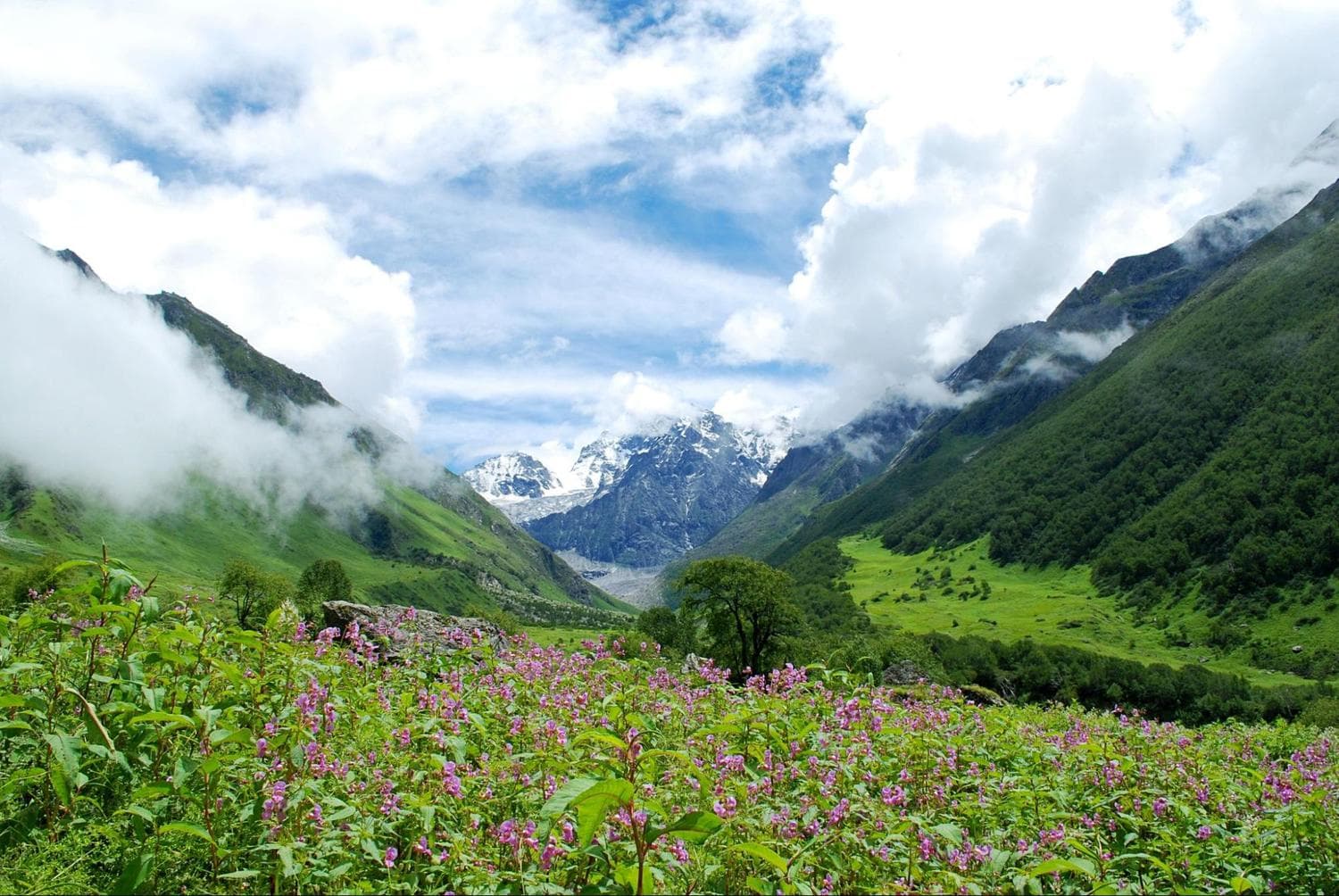
After 1.5 kilometers of trekking through the stunning Zaskar Range you will reach the Valley of Flowers. The park is open from June to October, right when the snow melts, and the trek to both Hemkund Lake and the Valley of Flowers becomes accessible.
The best visiting month is early September, when an abundance of rain and sunshine turns this valley into an oasis with over 600 species of exotic flowers. Some may even see signs of rare wildlife like the gray langur, Himalayan weasel, lime butterfly, snow leopard, and more.
Waterfalls, wild streams, and the backdrop of the great Himalaya—this is what the finale of this journey looks like.
Honorable Mention: Shri Hemkund Sahib Sikh Gurudwara
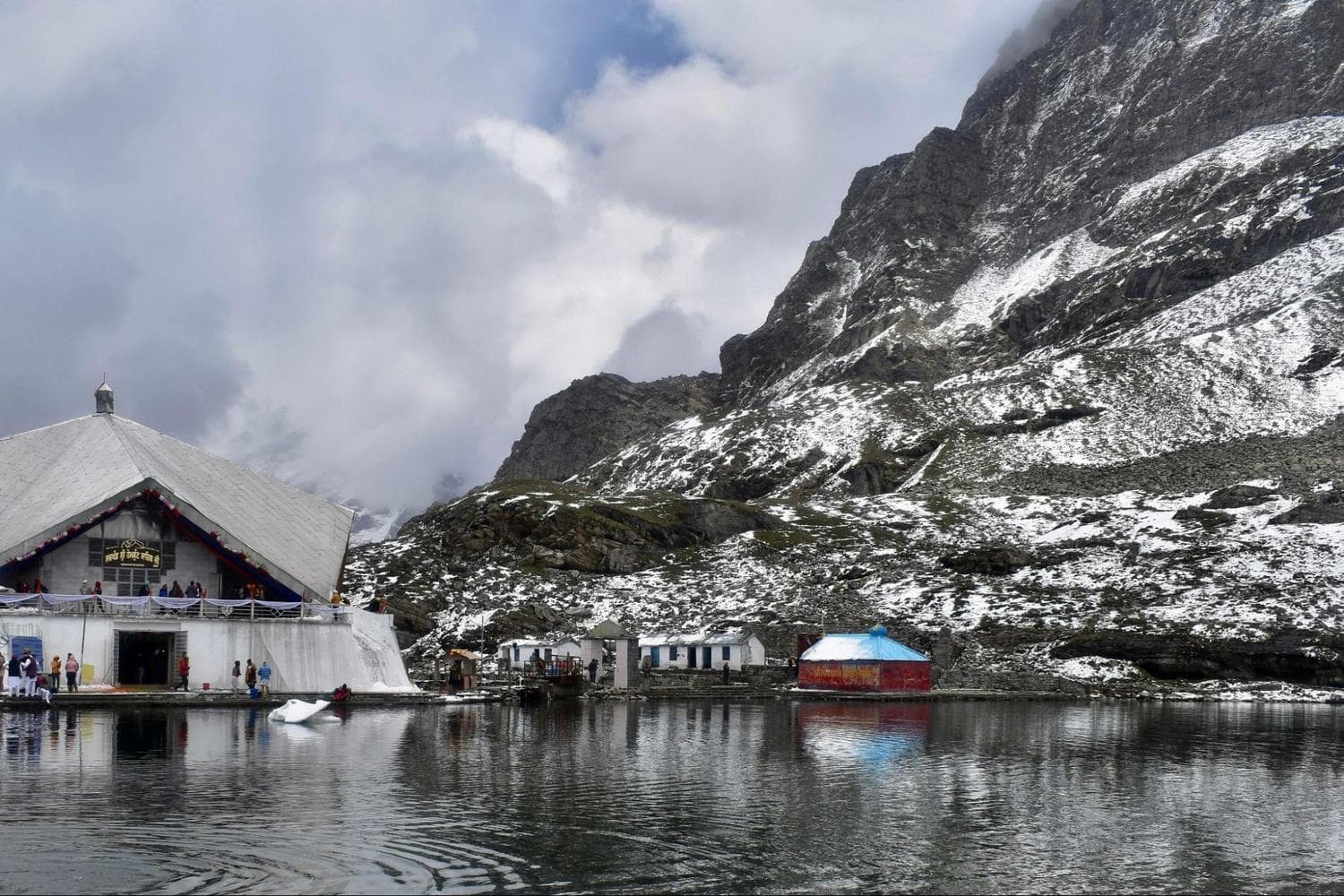
Located approximately 5–6 km from Ghangaria, this shrine is dedicated to Guru Gobind Singh Ji, the tenth and final Sikh Guru, who once meditated in this very place in his previous life. Leaving behind a partial autobiography, Bachittar Natak, the Sikh Guru depicted 32 years of his life through poetic compositions. This text, along with prominent sections from the Dasam Grantha, became an important Sikh scriptures that worshipers could reference.
When worshipers studied the scriptures, they noticed mention of a peculiar place hidden somewhere in the valleys of the Himalayas. Guided by these verses, explorers eventually located the site and marked it as one of the most important pilgrimage destinations of the Sikh community, naming it Hemkund Sahib. The name comes from Sanskrit: “Hem,” meaning “snow,” and “Kund,” meaning “bowl,” a term often used for small reservoirs of rainwaters.
Design and construction of the Shrine began in the mid-1960s at the banks of a small glacial lake known as Hemkund or Lokpal Lake. Making it the World's Highest Gurudwara at an altitude of 15,000 feet.
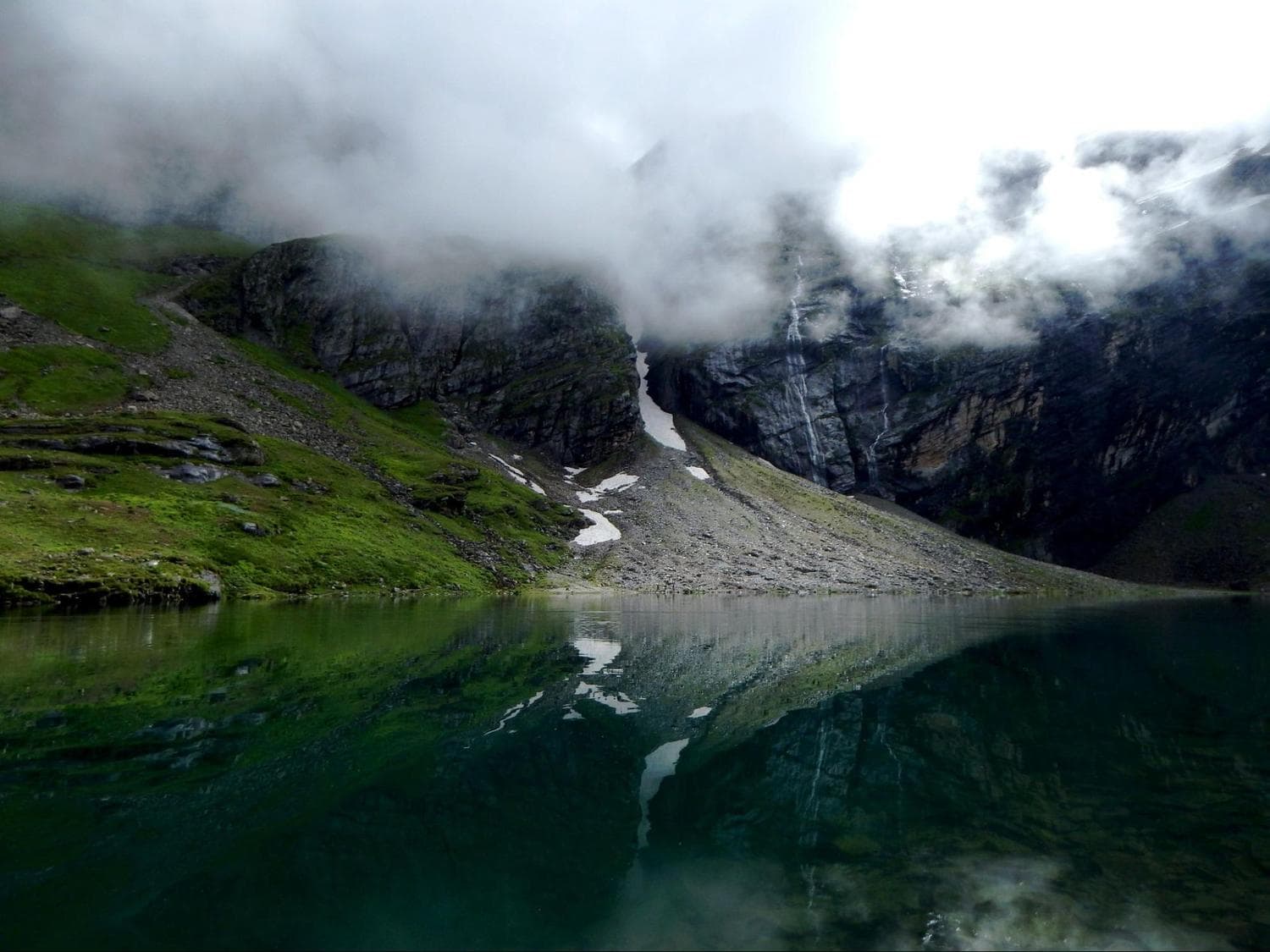
The lake is surrounded by seven glacial peaks, and each one is crowned by a Nishan Sahib, a yellowish-orange (basanti) or navy blue (surmai) colored triangular flag with the Khanda insignia in the middle. People often call it the Sikh Flag, and it represents the entire Sikh community.
The icing on the cake is sudden rains that create a thick fog right above the lake, turning this already magnificent scenery into a one of a kind view.
Tourists can also see pilgrims taking a dip in the very same lake, concluding their pilgrimage cycle and starting a journey anew.